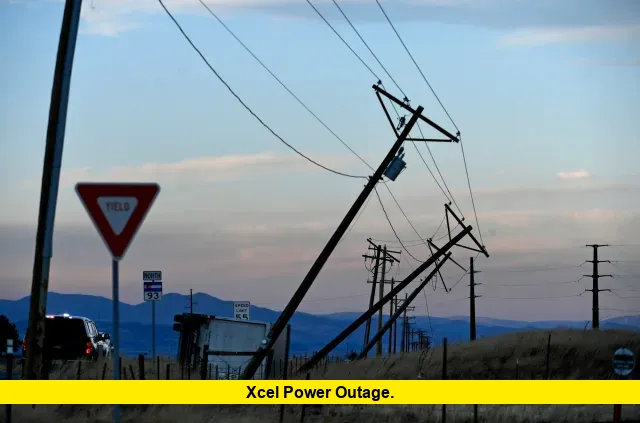
Colorado is in the dark — and people are furious. The Xcel power outage situation along the Front Range has exploded into one of the most talked-about utility crises in the state’s recent memory. With hurricane-strength winds battering Boulder County, thousands of homes losing electricity, and a utility company under intense public pressure, this story is moving fast and hitting close to home for hundreds of thousands of residents.
Here’s everything you need to know right now.
What Sparked the Crisis
It started with the weather — but it didn’t end there.
A powerful windstorm slammed Colorado’s Front Range this week, bringing gusts recorded above 75 miles per hour near Boulder. The National Center for Atmospheric Research Mesa Lab clocked those extreme readings as the storm tore through the region Thursday.
Xcel Energy had warned customers days in advance to prepare for potential outages. But preparation and reality hit very differently. Thousands of homes lost power within hours of the winds picking up.
The storm didn’t just knock the lights out. It reignited months of simmering frustration over how Xcel manages its grid during dangerous weather events.
The Numbers Are Staggering
At the peak of Thursday’s storm, more than 5,000 customers in Boulder County alone were without power. South Boulder was hit hardest, but outages spread quickly into Larimer and Jefferson counties, the foothills, and communities like Superior and south Lyons.
Across Xcel’s entire multi-state service area — covering 10 states — nearly 3,000 active outages were reported, affecting customers from Colorado to Lubbock, Texas.
And this wasn’t just one isolated event. In December, over 86,000 Xcel customers lost power during a similar wind event. In January, another 9,000 customers faced planned shutoffs, forcing some northern Colorado school districts to cancel classes entirely.
Sound familiar? You’re not alone — thousands of Coloradans are saying they’ve been through this too many times.
Xcel’s Controversial New Policy Is Making Outages Last Longer
Here’s the part that is really getting people talking.
Xcel activated what it calls “Enhanced Powerline Safety Settings” — a system designed to reduce wildfire risk. Under normal circumstances, when a power line faults, devices called re-closers automatically attempt to restore power three times before giving up.
Under the new enhanced settings? The power stays off until a crew physically inspects the line and confirms it’s safe to re-energize.
Xcel stated directly that this means outages “could last longer” than customers are used to. The company emphasized the decision is about wildfire prevention — two Boulder County wildfires were previously sparked by downed Xcel power lines — but critics argue the policy puts the burden squarely on already-struggling residents.
One homeowner on Lookout Mountain told reporters she and her household went five days without power during the last major event. Her family bought a generator afterward. “The flip side is we don’t want fires burning down the hill,” she acknowledged. “So we’ll see if this works better.”
The Human Cost Is What’s Going Viral
Beyond statistics, it’s the personal stories that have caught the internet’s attention.
The story of two Boulder women — Betty Devine and her roommate Beatrice Bell — went viral earlier this year after they lost power for four days during December’s windstorm. Bell, who has Stage 4 breast cancer and depends on an oxygen compressor, had only four spare tanks — enough for roughly one day without electricity.
The pair lost nearly $200 in food from spoilage. With only $300 a month left after rent and utilities, that wasn’t just an inconvenience. It was a catastrophe.
Their story put a deeply human face on the Xcel power outage debate and sparked widespread outrage, with thousands of Coloradans sharing their own experiences across social media platforms.
Why This Xcel Power Outage Story Keeps Coming Back
This isn’t a new problem. It’s a pattern.
Boulder residents have been at odds with Xcel Energy for decades. In the early 2000s, the city launched a campaign to create its own municipal utility. Voters approved ballot measures in 2011. Legal battles dragged on for years, with critics accusing Xcel of obstructing the process at every turn.
Now, in 2026, with climate-driven wind events growing more frequent and intense, the tension has reached a boiling point. State lawmakers have pushed Xcel to invest in more resilient energy infrastructure. A “virtual power plant” program is being piloted that could help reroute electricity during future outages.
But for residents sitting in the dark right now, with downed lines hanging into roads and temperatures swinging wildly, policy promises feel very far away.
Xcel says it has made improvements since its first major safety shutoff in April 2024. Regulators are watching closely. And Colorado communities are demanding accountability — not just reassurances.
Do you live in an affected area? Have you been impacted by the Xcel power outage this week — or during a past event? Drop your experience in the comments and share this story so others stay informed.