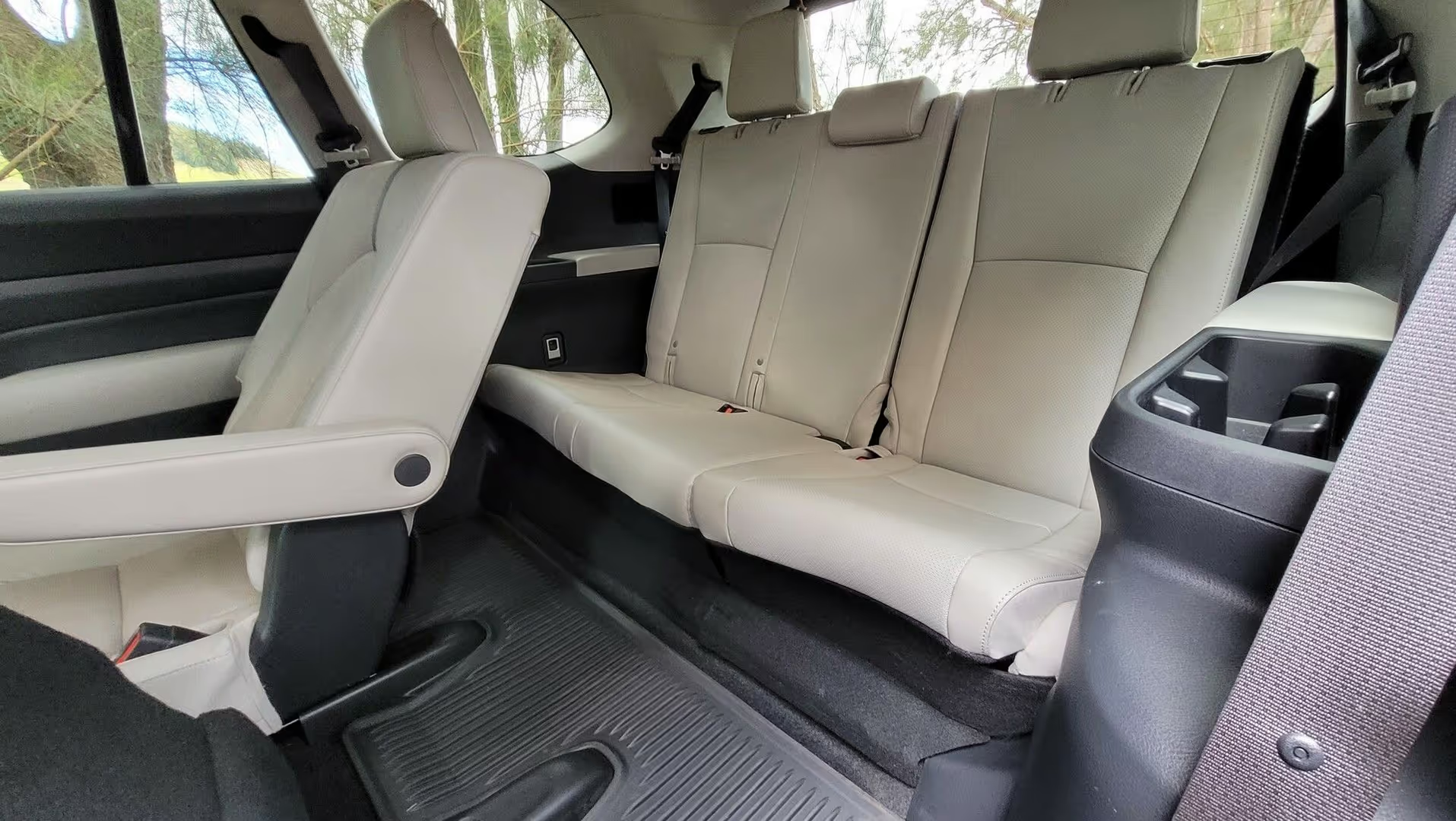
Federal safety regulators and Toyota are at the center of a major automotive story this week after Toyota Recalls 550,000 Vehicles Over Seat Issue tied to a second-row seat-back locking defect found in some of the brand’s most popular family SUVs. The announcement, made official on March 11, 2026, has set off a wave of concern among Highlander owners across the United States — and for good reason.
This is a fast-moving story with direct safety implications for hundreds of thousands of American families, and developments are expected to continue through the coming months.
Background: The Toyota Highlander and Its Place on American Roads
The Toyota Highlander has been one of the most consistently popular three-row SUVs in the United States for years. Marketed as a family-first vehicle built around reliability, comfort, and safety, it is a fixture in suburban driveways from coast to coast. The Highlander Hybrid version has also grown in popularity as fuel efficiency became an increasingly important factor for buyers.
That reputation for dependability is precisely why this recall has generated such intense attention. When a vehicle trusted to carry children, elderly passengers, and families on road trips becomes the subject of a federal safety recall, the stakes feel personal to millions of people — not just the 550,007 directly affected owners.
What Triggered the Recall
The defect at the heart of this recall involves the second-row seat-back recliner mechanism. In affected vehicles, the seat-back may fail to lock securely into position after a passenger adjusts it. Under normal driving conditions, that might go entirely unnoticed. But in a collision — particularly one at higher speeds — an unlocked seat-back cannot properly restrain the occupant. The result is a significantly elevated risk of injury.
The recall covers 420,771 Highlander vehicles and 129,236 Highlander Hybrid vehicles, all from model years 2021 through 2024. The National Highway Traffic Safety Administration formally logged the action under recall numbers 26TB06 and 26TA06. Toyota has stated that as of the announcement date, no injuries have been reported in connection with the defect, and the recall is being issued as a precautionary measure.
The fix itself is straightforward. Toyota dealers will replace the return springs inside the seat-back recliner assemblies. The repair will be performed at no cost to vehicle owners.
Public Reaction: Concern, Relief, and Frustration
The response from Highlander owners has been a mix of relief that the issue was identified before injuries occurred, and genuine frustration over the scope of the problem. Online forums and social media platforms have been active with owners sharing VIN lookup results, asking about estimated repair times, and expressing concern about family members who regularly travel in the second row of their vehicles.
For many parents, the realization that the seat behind the driver — often where young children sit — could be compromised in a crash was alarming. Several owners noted that the defect would have been nearly impossible to detect without actively testing the locking mechanism before every drive, something most people never think to do.
Auto safety advocates have largely praised the recall as responsible and proactive, noting that acting before injuries accumulate is exactly how the system is supposed to work. Still, the sheer scale of the recall — more than half a million vehicles — has fueled broader questions about quality control during the 2021–2024 production window.
What Toyota Has Said
Toyota has been direct and public in its acknowledgment of the defect. The automaker stated that official notification letters will be mailed to owners of affected vehicles beginning in early May 2026. The letters will include instructions for scheduling a service appointment at any authorized Toyota dealership.
Owners who do not want to wait for a mailed notice can verify their vehicle’s recall status immediately by entering their 17-digit Vehicle Identification Number on the NHTSA’s official recalls database or on Toyota’s own recall webpage. Toyota also confirmed that its customer service line — reachable at 1-800-331-4331 — is available for owners who have questions about the repair process or the safety of their vehicles in the meantime.
The company’s messaging has been consistent: the repair is free, it is straightforward, and owners should not delay.
Why This Recall Matters Beyond the Numbers
A recall of 550,000 vehicles over a seat issue is significant on its own. But this story carries weight that goes beyond the raw numbers.
Toyota has spent decades cultivating a reputation as one of the most reliable automotive brands in the world. That reputation is not just a marketing point — it is the reason millions of American families specifically choose a Toyota when safety is the top priority. A seat defect in a family SUV, affecting the very row where children most commonly ride, strikes at the emotional core of what the Highlander brand represents.
This recall also arrives shortly after Toyota separately recalled approximately 141,000 Prius and Prius Prime vehicles due to rear doors that could unexpectedly open while the car was in motion. Two significant safety actions within a short period will likely invite scrutiny of Toyota’s manufacturing and quality assurance processes, even if each individual issue is addressed swiftly and effectively.
For the broader auto industry, this is also a reminder of how critical the recall system is. The NHTSA’s role in surfacing, documenting, and publicly disclosing defects of this nature is what gives vehicle owners the information they need to make safe decisions.
What Comes Next
Toyota is preparing to manage a high volume of service appointments once owner notifications begin rolling out. Dealers are expected to see significant demand, particularly in markets with high concentrations of Highlander owners. Owners of 2021–2024 Highlander and Highlander Hybrid vehicles are strongly encouraged to verify their status now rather than waiting for the May notification letter.
The NHTSA will continue to monitor the recall’s progress, and Toyota is required to report on completion rates as the repair campaign advances. If additional model years or variants are identified as part of ongoing investigation, an expansion of the recall could be issued — though no such expansion has been indicated at this time.
For now, the priority is simple: check your VIN, schedule the free repair, and ensure that every seat in your vehicle is doing exactly what it is supposed to do.
If you own a 2021–2024 Toyota Highlander or Highlander Hybrid, check your VIN today — and drop a comment below to let us know if your vehicle is affected.