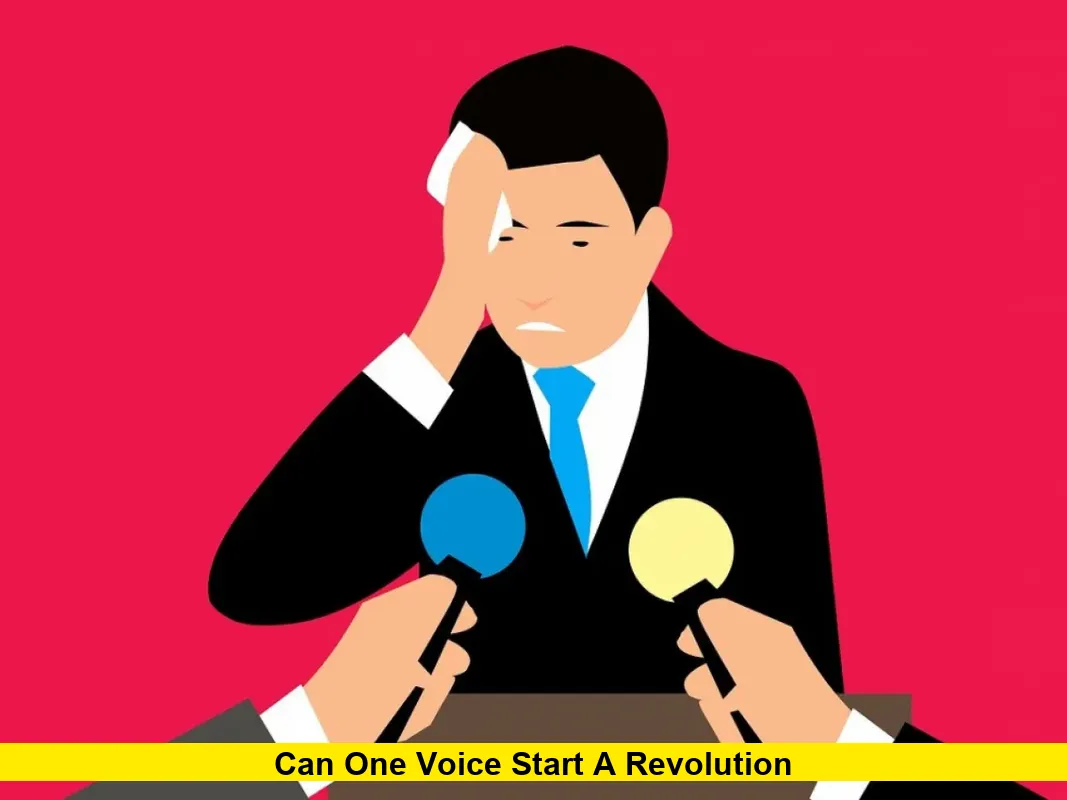
Throughout history, major social changes often began with something surprisingly small — one person speaking when everyone else stayed silent. A single voice may not look powerful at first, but ideas can spread faster than people expect. One statement, one protest, one question, or one act of resistance can inspire thousands of others who were already thinking the same thing but were too afraid to say it publicly.
That is why revolutions rarely begin with large crowds. They usually begin with one person willing to speak first.
Why People Stay Silent Even When They Feel Suppressed
In real life, many people feel frustrated, controlled, ignored, or unfairly treated. Yet most still choose silence over confrontation. This does not always mean they agree with the system around them. Often, it means they fear the consequences of speaking openly.
Fear is one of the strongest forces in society.
People may worry about:
- Losing their job
- Being socially isolated
- Facing criticism
- Damaging relationships
- Legal pressure
- Public humiliation
- Online attacks
- Financial consequences
Even in everyday environments like workplaces, schools, or communities, people often avoid raising serious issues because they believe speaking up could make their situation worse instead of better.
Why One Voice Can Feel Dangerous to Powerful Systems
Large systems often appear strong because most people cooperate quietly. But when one person publicly questions authority, it can encourage others to think independently.
That is why powerful institutions sometimes react strongly to criticism. One voice alone may not create immediate change, but it can create awareness. Awareness spreads conversations. Conversations create movements.
History repeatedly shows that systems fear unity more than individuals. But unity usually begins with one person willing to break silence first.
Most People Are Waiting for Someone Else to Speak First
Many individuals privately share the same frustrations but assume they are alone. They remain silent because they believe nobody else will support them.
Then one person speaks openly — and suddenly others realize they were never alone.
This pattern appears in politics, workplaces, social movements, education systems, and even online communities. The first voice often carries the greatest risk because it faces pressure before public support forms.
That is why speaking first requires courage.
Social Media Changed the Power of One Voice
In the modern world, one message can reach millions within hours. Social media platforms allow ordinary individuals to share opinions, expose problems, and organize discussions without needing traditional media support.
This has changed how influence works.
A single video, post, or statement can spark national debates, public protests, or corporate responses. People who once felt powerless now have tools to communicate directly with large audiences.
At the same time, public visibility also creates new risks. Online criticism, cancel culture, misinformation, and harassment can discourage people from expressing controversial opinions.
As a result, many still remain silent despite having platforms to speak.
Why Revolutions Are Psychological Before Political
Before systems change externally, people usually change internally first.
A revolution often begins when individuals stop believing silence will protect them forever. Once enough people lose fear, systems can change rapidly.
This does not always mean violent revolution. Sometimes revolutions happen culturally, economically, technologically, or socially.
Ideas themselves can become revolutionary when they challenge accepted norms.
Can One Person Truly Change Society?
One person alone rarely changes everything overnight. But one person can absolutely begin the process.
Movements, reforms, protests, and social shifts often start with individuals who refused to stay quiet. The impact grows when others recognize their own frustrations in that voice.
The first speaker becomes symbolic of a much larger issue.
That is why history remembers certain individuals long after systems change. They represented feelings millions of people already carried privately.
Fear Still Controls Many People Today
Even today, countless people avoid confronting unfair situations because survival feels more important than resistance.
Some believe nothing will change anyway. Others fear retaliation too much to take risks publicly.
This creates an important question for society:
If everyone stays silent because of fear, how can problems ever be solved?
That question remains at the center of nearly every major social movement in history.
The Real Power of One Voice
One voice alone may not immediately create a revolution. But it can create awareness, courage, discussion, and momentum.
Silence protects systems. Conversation challenges them.
The moment people realize others share the same concerns, fear begins losing its power.
And sometimes, that is exactly how revolutions begin.
Do you believe one person can truly create change, or does fear stop most people before movements even begin? Share your thoughts in the comments — and tell us about a moment when you wanted to raise your voice but felt afraid to speak out. Your experience may inspire others to open up and start an important conversation.