There is a sentence people repeat in almost every country when they see injustice inside a powerful institution:
“You cannot fight the system.”
The statement sounds simple, but behind it lies fear, frustration, and lived experience.
The “system” can mean:
- a bank,
- a government office,
- a corporation,
- a university,
- a legal structure,
- or any institution powerful enough to influence people’s lives.
This idea becomes especially emotional when an ordinary employee stands against a large institution after being treated unfairly.
Imagine a bank employee accused falsely for a mistake made by senior officials. The employee knows the truth. Some colleagues may secretly know it too. Yet instead of receiving support, the person faces suspension, pressure, humiliation, or isolation.
At that moment, society usually reacts in a predictable way:
- friends advise compromise,
- relatives fear consequences,
- coworkers avoid involvement,
- and many quietly say:
“Even if he is right, he cannot win.”
But is that actually true?
Can one individual defeat the system?
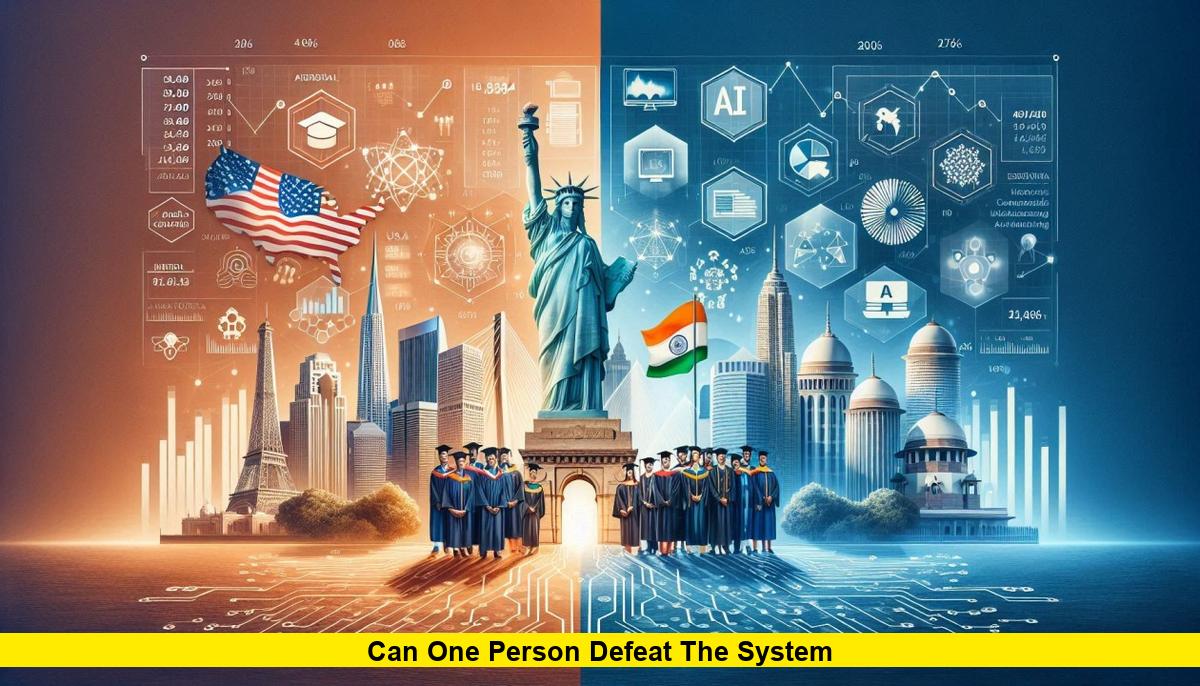
The answer becomes more interesting when we compare countries like India and United States.
Although both are democracies, the relationship between citizens and institutions feels very different in each country.
What Does “System” Really Mean?
People often think the system is only laws and rules. In reality, a system is much bigger.
A system includes:
- authority,
- hierarchy,
- money,
- influence,
- internal networks,
- political connections,
- institutional culture,
- and public reputation.
For example, a bank is not just a workplace. It is also:
- a financial structure,
- a regulatory entity,
- a chain of command,
- and a brand trying to maintain trust.
Because of this, institutions often prioritize stability and reputation over admitting mistakes.
This happens in both India and the United States, but the way institutions react — and the ability of individuals to respond — differs significantly.
Why Institutions Usually Feel More Powerful Than Individuals
A single employee fighting a large institution is rarely an equal battle.
The institution usually has:
- lawyers,
- administrative authority,
- financial resources,
- public influence,
- and procedural advantages.
The individual may only have:
- personal savings,
- limited legal knowledge,
- emotional strength,
- and a few documents.
This imbalance creates fear even before the fight begins.
In both India and the United States, ordinary people often feel exhausted not because they are wrong, but because systems can prolong conflicts for years.
The biggest difference is not whether injustice exists. Injustice exists everywhere.
The real difference is:
How easily can an ordinary person challenge power?
The American View: Stronger Legal Power, But Expensive Battles
In United States, institutions are extremely powerful, but individuals also have strong legal tools available.
Employees in America may use:
- labor lawsuits,
- whistleblower protection laws,
- class-action suits,
- investigative journalism,
- unions,
- and public legal advocacy.
American society also has a culture where openly challenging corporations or government agencies is more socially accepted.
For example:
- employees have exposed banking scandals,
- corporate fraud has led to billion-dollar penalties,
- and whistleblowers have sometimes received legal protection.
Large institutions in the U.S. fear:
- media exposure,
- public outrage,
- shareholder pressure,
- and costly litigation.
Because of this, institutions cannot always silence individuals easily.
However, this does not mean justice is simple in America.
The American legal system is extremely expensive.
A person may technically have the right to fight, but legal fees, emotional stress, and long court battles can still destroy careers and mental peace.
In many American cases, the individual wins only after years of pressure and public attention.
So the United States gives individuals more tools to fight the system — but the fight can still be financially and psychologically brutal.
The Indian View: Rights Exist, But the Process Can Be Overwhelming
In India, the situation feels different emotionally and structurally.
India has:
- constitutional protections,
- labor courts,
- public-interest litigation,
- anti-corruption mechanisms,
- and a judiciary capable of historic judgments.
Indian courts have delivered major decisions against governments, corporations, and institutions many times.
On paper, Indian citizens possess strong democratic rights.
Yet ordinary people often feel powerless while using those rights.
Why?
Because many individuals struggle with:
- slow court proceedings,
- bureaucratic delays,
- corruption concerns,
- political influence,
- procedural complexity,
- and financial limitations.
An employee fighting a bank or government body in India may spend years attending hearings, filing documents, and waiting for decisions.
Even if the person eventually wins, the emotional and financial damage may already be severe.
This creates a painful public perception:
“Justice exists, but reaching justice is exhausting.”
Unlike the United States, where media pressure often rapidly shapes public opinion, many Indian employees fear social isolation during institutional disputes.
People worry about:
- losing future opportunities,
- angering influential people,
- damaging family reputation,
- or becoming trapped in endless legal battles.
As a result, many individuals compromise even when they are morally correct.
The Psychological Difference Between India and America
One major difference between the two countries is psychological culture.
In America, individuals are often encouraged to:
- question authority,
- challenge corporations,
- sue institutions,
- and speak publicly.
In India, respect for hierarchy remains deeply rooted socially.
Many people are taught:
- not to challenge seniors,
- not to create conflict,
- and not to “fight the system.”
This cultural mindset influences how employees react when institutions behave unfairly.
An American employee may think:
“I will sue.”
An Indian employee may first think:
“Can I survive this fight?”
This does not mean Indians are weaker. It reflects different social realities and institutional experiences.
Truth Alone Is Not Enough in Either Country
One uncomfortable reality exists in both India and the United States:
Being morally right does not automatically guarantee victory.
Systems respond to:
- evidence,
- documentation,
- legal pressure,
- public accountability,
- and persistence.
Truth without proof often fails inside institutions.
Even when proof exists, systems may still delay action through:
- legal appeals,
- internal inquiries,
- technical procedures,
- or bureaucratic complexity.
This is why many people eventually conclude:
“The system protects itself first.”
And often, that conclusion is not entirely wrong.
Institutions are designed primarily to survive crises.
Admitting wrongdoing threatens:
- reputation,
- authority,
- public trust,
- and financial stability.
Because of this, institutions frequently resist accountability until pressure becomes unavoidable.
The Real Cost of Fighting the System
One important reality is rarely discussed openly.
Winning legally and surviving emotionally are not the same thing.
A person may eventually defeat an institution in court after ten years. But during those years:
- savings may disappear,
- careers may collapse,
- families may suffer,
- and mental health may deteriorate.
This is why many people say:
“The system always wins.”
They do not always mean legal victory.
They mean the system often has the power to exhaust ordinary people emotionally.
So, Can One Person Defeat the System?
Yes — but usually not quickly, easily, or alone.
In both India and United States, individuals have successfully challenged powerful institutions.
But success often depends on:
- evidence,
- patience,
- legal support,
- media attention,
- financial endurance,
- public pressure,
- and mental resilience.
The difference is that the American system often provides faster public confrontation mechanisms, while the Indian system frequently tests a person’s endurance over time.
Still, history in both countries proves one thing clearly:
Systems are powerful, but they are not untouchable forever.
Sometimes one person loses.
Sometimes one person survives.
And sometimes one person exposes weaknesses inside the entire structure.
The real measure of a country is not whether institutions make mistakes.
The real measure is whether ordinary people can challenge those mistakes without destroying their entire lives in the process.
Do you believe ordinary people in India or the United States truly have a fair chance against powerful institutions? Share your thoughts and experiences in the comments, and stay connected for more deep discussions on society, justice, and power.