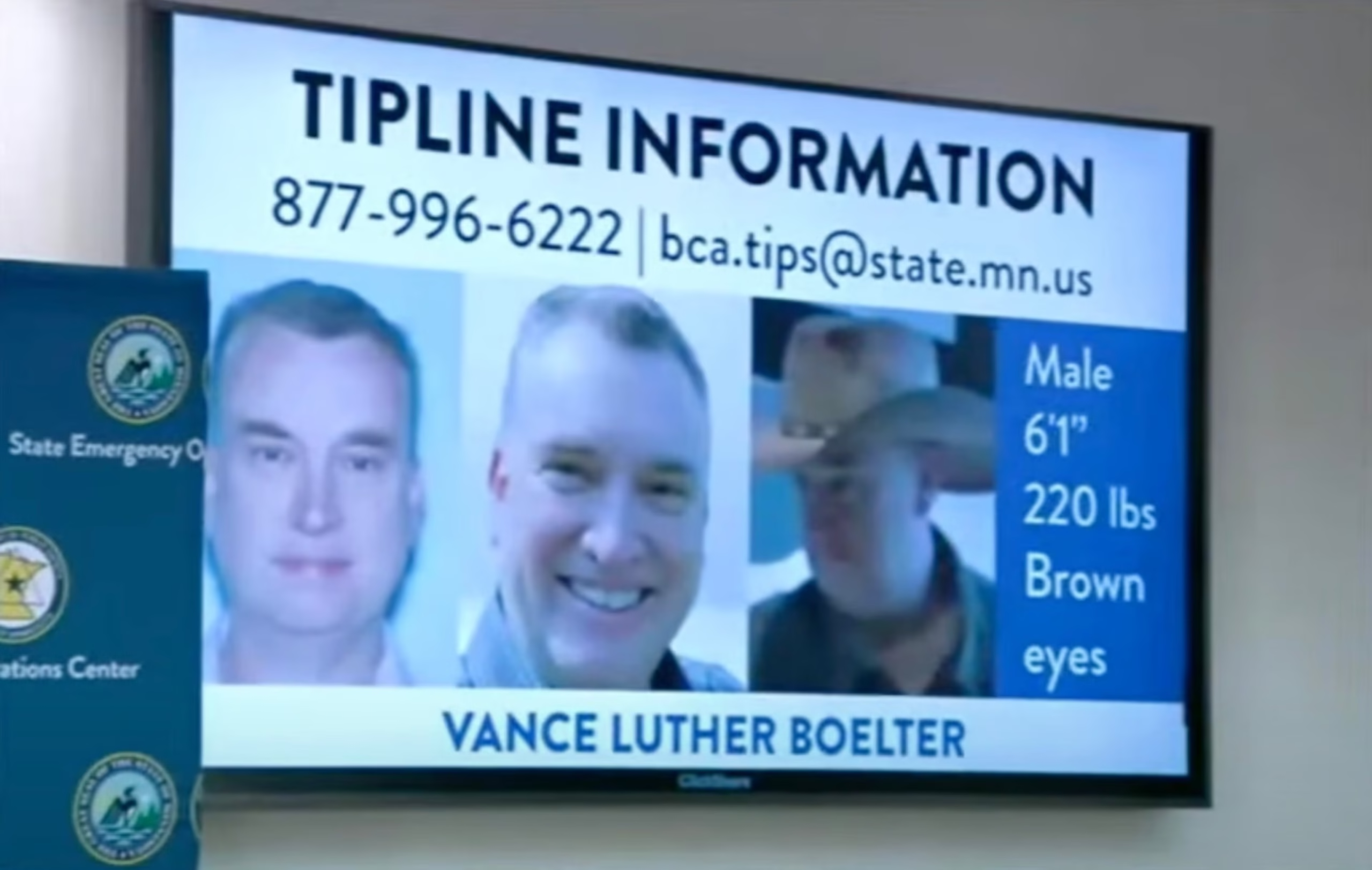
The question of Vance Luther Boelter political affiliation has become central since his arrest in connection with the assassination of Minnesota’s former House Speaker, Melissa Hortman, in June 2025. While investigators have focused on his criminal actions and trial, the public continues to look at his political leanings to better understand what drove him toward such devastating violence.
Early Voting History and Party Preferences
Public records and testimonies indicate that Boelter consistently leaned toward the Republican Party over the years. He was once formally registered as a Republican in another state before relocating to Minnesota. More recently, his ballot choices confirmed that he aligned with the conservative side of the political spectrum.
Unlike some voters who frequently switch party support, Boelter showed a pattern of consistency in favor of conservative candidates and causes. His preferences in statewide and national elections reflected strong loyalty to right-leaning platforms, particularly those focused on traditional values and limited government.
A Deeply Conservative Identity
Understanding Vance Luther Boelter political affiliation goes beyond his voting record. Those who knew him described him as staunchly conservative, particularly on social and cultural issues.
- He expressed anti-abortion views and often tied his political outlook to religious beliefs.
- He opposed expanded protections for LGBTQ communities, aligning with the more traditionalist wing of American conservatism.
- His personal discussions revealed support for strong immigration enforcement and skepticism toward progressive climate policies.
This alignment shows that his political identity was not passive. Instead, it was deeply ingrained and influenced by his worldview.
The Role of Religion in Politics
Religion was central to how Boelter framed his political affiliation. He was an active churchgoer and occasionally gave sermons that blended faith with civic issues. For him, politics and religion were inseparable, and this reinforced his alignment with socially conservative values.
His beliefs positioned him closer to the evangelical Republican base, which often emphasizes traditional family structures, religious freedom, and resistance to progressive cultural reforms.
Distinguishing Fact from Rumor
Since his arrest, misinformation has circulated about Vance Luther Boelter political affiliation, with some claiming he had ties to different parties or radical groups. In reality, the evidence suggests:
- He was conservative and Republican-leaning, not progressive.
- He was never publicly aligned with the Democratic Party or Minnesota’s Democratic-Farmer-Labor (DFL) Party.
- His strongest connections came from his own religious convictions and personal ideological choices, rather than from active party leadership roles.
This distinction is important. While Boelter’s political identity leaned Republican, there is no record that he held an official role in any political organization. He was primarily a voter, supporter, and outspoken individual within his personal circles.
Why Political Affiliation Matters in This Case
Some might ask why the political identity of a criminal suspect is worth exploring. In Boelter’s case, it helps shed light on the context of the tragedy. The individuals he targeted were Democratic leaders, including Melissa Hortman and Senator John Hoffman.
The alignment between his conservative ideology and the political orientation of his victims makes his political leanings part of the broader story. It helps explain why the shootings were not random, but rather tied to a worldview that viewed progressive lawmakers as adversaries.
What Remains Unclear
While much has been revealed, there are still areas where details about Vance Luther Boelter political affiliation remain unclear:
- There is no confirmation that he belonged to a specific Republican subgroup or local organization.
- It is not known if he contributed financially to campaigns or actively volunteered in political activities.
- His writings suggest extreme interpretations of conservative ideology, but it is still debated how much of this reflected mainstream politics versus personal radicalization.
Summary Table
| Aspect | Details |
|---|---|
| General Alignment | Conservative, Republican-leaning |
| Party Registration History | Registered Republican in the past; voted in GOP primaries |
| Core Beliefs | Anti-abortion, anti-LGBTQ policies, evangelical influence |
| Formal Roles | No evidence of official party leadership |
| Link to Tragedy | Targeted Democratic lawmakers, aligning with ideological hostility |
Closing Thoughts
The story of Vance Luther Boelter political affiliation underscores how personal beliefs, ideology, and political identity can intersect with violence in devastating ways. While his alignment leaned toward the conservative and Republican side, his actions were his own, shaped by extreme interpretations and personal convictions.
As his trial unfolds, the focus will remain on justice for the victims and accountability for his crimes. Yet, understanding his political affiliation helps frame the tragedy in a larger context, showing how divisive ideologies can escalate to unthinkable consequences.