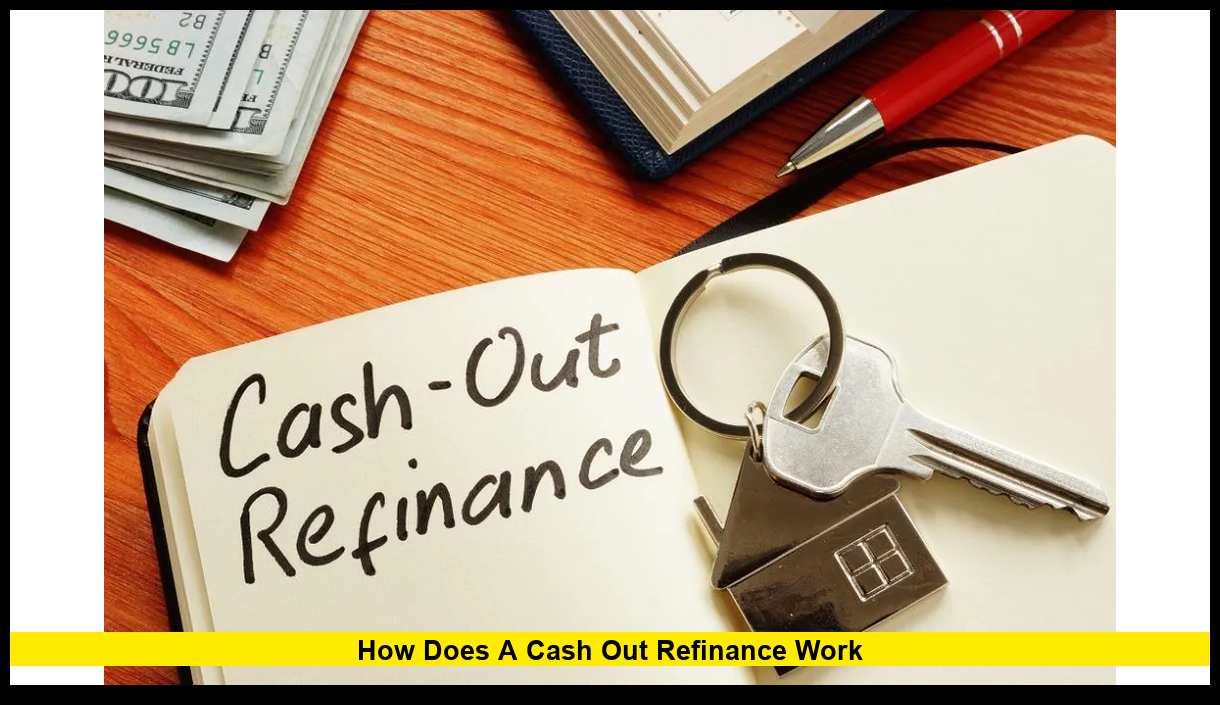
If you’ve built up equity in your home over the past few years, you may be wondering how to turn that value into usable cash without selling your house. A cash-out refinance is one of the most popular ways homeowners do exactly that. Below, we break down how does a cash-out refinance work, what it costs, who qualifies, and whether it still makes sense in today’s rate environment.
What Is a Cash-Out Refinance?
A cash-out refinance replaces your existing mortgage with a brand-new, larger home loan. The new loan pays off your old mortgage balance, and you receive the leftover difference as a lump sum of cash at closing. Unlike a home equity loan or HELOC, which sit alongside your existing mortgage as a second lien, a cash-out refinance becomes your one and only mortgage going forward.
For example, if your home is worth $400,000 and you owe $200,000, you have $200,000 in equity. With a conventional cash-out refinance capped at 80% loan-to-value (LTV), you could refinance into a new loan of up to $320,000, walk away with roughly $120,000 in cash (minus closing costs), and start making payments on the new, larger balance.
How Does a Cash-Out Refinance Work, Step by Step
- Apply with a lender. You submit an application, authorize a hard credit pull, and provide income, asset, and employment documentation.
- Home appraisal. The lender orders an appraisal to confirm your home’s current market value, since this determines your maximum loan-to-value ratio.
- Underwriting. The lender reviews your credit score, debt-to-income (DTI) ratio, and overall financial profile to calculate how much you qualify to borrow.
- Loan approval and closing disclosure. Once approved, you’ll receive a closing disclosure outlining your new rate, term, monthly payment, and the exact cash amount you’ll receive.
- Closing and funding. You sign the new loan documents, your old mortgage is paid off, closing costs are deducted, and the remaining cash is wired to your account, typically within a few business days after closing.
The entire process usually takes 30 to 45 days from application to funding, depending on the lender and how quickly you submit paperwork.
Cash-Out Refinance Rates in June 2026
Cash-out refinance rates are generally a quarter to a half percentage point higher than standard rate-and-term refinance rates, since lenders view cash-out transactions as carrying slightly more risk. As of mid-June 2026, average 30-year fixed refinance rates have been hovering in the high-6% to low-7% range, meaning cash-out refinance borrowers can typically expect rates somewhere in the high-6% to mid-7% range depending on credit score, loan-to-value ratio, and loan type. Rates change daily, so it’s worth getting quotes from at least three lenders before committing.
Maximum Loan-to-Value (LTV) Limits by Loan Type
- Conventional cash-out refinance: Capped at 80% LTV for a primary residence, meaning you must retain at least 20% equity after refinancing.
- FHA cash-out refinance: Also capped at 80% LTV, with more flexible credit requirements than conventional loans, but mortgage insurance applies for the life of the loan.
- VA cash-out refinance: The most generous option, technically allowing up to 100% LTV, though many lenders apply their own overlay and cap it closer to 90% to 95% in practice. Available only to eligible veterans, active-duty service members, and qualifying surviving spouses.
- Jumbo cash-out refinance: The most restrictive, typically limited to 70% to 75% LTV depending on the lender.
Eligibility Requirements
While exact requirements vary by lender and loan program, most cash-out refinances share these baseline guidelines:
- A minimum of 20% home equity for conventional and FHA loans
- A credit score of at least 620 for conventional loans, though FHA may accept scores in the high 500s to low 600s
- A debt-to-income ratio ideally at or below 45%
- Your existing first mortgage must typically be at least 12 months old before a conventional cash-out refinance is allowed
- A fresh home appraisal to confirm current market value
Cash-Out Refinance vs. Other Ways to Tap Equity
- Cash-out refinance: Replaces your entire first mortgage with one new, larger loan. Best if you can also secure a competitive rate on the full balance.
- Home equity loan: A second loan on top of your existing mortgage, paid out as a lump sum with a fixed rate. Keeps your original mortgage rate untouched.
- HELOC (Home Equity Line of Credit): A revolving credit line secured by your home, useful for ongoing or uncertain expenses rather than a one-time need.
If your current mortgage rate is already low, a home equity loan or HELOC may make more sense than refinancing your entire balance at a higher rate. If your current rate is close to today’s market rate, a cash-out refinance often becomes the more efficient option.
What Can You Use the Cash For?
There are generally no restrictions on how you spend the funds from a cash-out refinance. Common uses include:
- Home renovations or repairs that may increase property value
- Consolidating high-interest credit card or personal loan debt
- Covering college tuition or other major expenses
- Funding a down payment on an investment property or vacation home
- Building an emergency fund or covering unexpected costs
Pros and Cons of a Cash-Out Refinance
Pros:
- Access to potentially large sums of cash at a lower rate than credit cards or personal loans
- Only one monthly mortgage payment to manage
- Interest may be tax-deductible if funds are used for home improvements (consult a tax professional)
Cons:
- Closing costs typically run 2% to 6% of the loan amount
- Your overall loan balance and monthly payment increase
- You’re extending or resetting your repayment timeline if you choose another 30-year term
- Reduces your home equity cushion, which can matter if home values decline
Is a Cash-Out Refinance Worth It Right Now?
With many homeowners still locked into mortgage rates well below 6% from the pandemic era, refinancing the entire loan balance at today’s higher rates isn’t always the obvious choice. A cash-out refinance tends to make the most sense when you genuinely need a substantial lump sum, when your current rate is close to today’s market rate anyway, or when converting to a VA loan to eliminate mortgage insurance outweighs the rate difference. Run the numbers with a loan officer or refinance calculator before deciding, and compare a cash-out refinance against a home equity loan or HELOC for your specific situation.
Cash Out Penalty: What It Means and How It Works
A cash out penalty is a financial charge or tax consequence that occurs when money is withdrawn from certain accounts before meeting specific requirements. These penalties are commonly associated with retirement accounts, certificates of deposit (CDs), annuities, and some investment products. The purpose of a cash out penalty is to discourage early withdrawals and encourage long-term saving.
For example, if someone withdraws funds from a CD before its maturity date, the bank may charge a penalty equal to several months of interest. Similarly, annuities often include surrender charges if money is taken out during a designated surrender period. The exact penalty amount depends on the financial institution, account type, and the terms agreed upon when the account was opened.
Cash out penalties can significantly reduce the amount of money received from a withdrawal. Before taking funds out of any account, it is important to review the account agreement and understand any fees, taxes, or restrictions that may apply. In some cases, exceptions may be available for hardship situations or specific qualifying events.
401(k) Cash Out Penalty: If you cash out a 401(k) before age 59½, you may generally owe a 10% early-withdrawal penalty in addition to ordinary income taxes on the amount withdrawn, unless you qualify for an exception.
Frequently Asked Questions
How much cash can I get from a cash-out refinance? This depends on your home’s appraised value, your existing loan balance, and your loan type’s maximum LTV. Conventional and FHA loans generally cap borrowing at 80% of your home’s value, while VA loans can go higher.
Does a cash-out refinance hurt my credit score? Applying triggers a hard credit inquiry, which can cause a small, temporary dip. Making on-time payments on the new loan helps rebuild and maintain your score over time.
Is the cash from a cash-out refinance taxable? No. Because a cash-out refinance is debt, not income, the funds you receive are not considered taxable.
How long does a cash-out refinance take to close? Most cash-out refinances close within 30 to 45 days from application, though timelines vary by lender and how quickly documentation is provided.
Can I do a cash-out refinance if I have bad credit? It’s possible, particularly through an FHA cash-out refinance, which allows lower credit scores than conventional loans. However, a lower score typically means a higher interest rate.
What’s the difference between a cash-out refinance and a limited cash-out refinance? A limited (or “rate-and-term”) cash-out refinance allows only a small amount of cash back, mainly to cover closing costs, and has higher LTV allowances. A full cash-out refinance lets you access significantly more equity but comes with stricter LTV limits.
Got questions about your own refinance options? Drop them in the comments below, and don’t forget to bookmark this page for the latest mortgage rate updates!