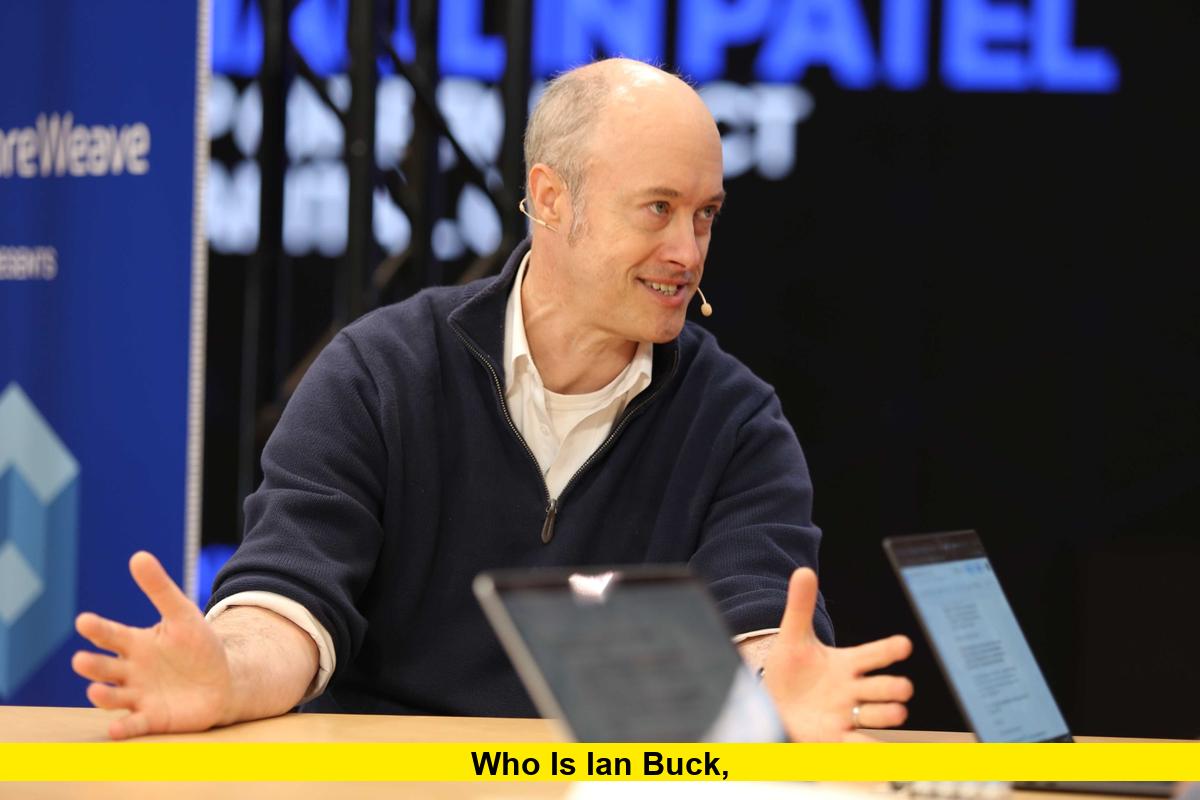
Ian Buck is the Vice President of Hyperscale and High-Performance Computing at NVIDIA, the executive who created CUDA and now oversees the hardware and software powering the world’s largest AI deployments. As the architect behind the platform that turned graphics processors into the foundation of modern artificial intelligence, Ian Buck NVIDIA leadership shapes products used by Microsoft, Google, Amazon, Meta, OpenAI, and national laboratories.
Buck joined NVIDIA in 2004 after earning his Ph.D. in computer science from Stanford University. There he led development of Brook, a programming language that treated GPUs as stream processors for general-purpose work. That research directly informed CUDA, which NVIDIA released in November 2006. CUDA lets developers write C-like code that runs on NVIDIA GPUs and has grown into a full-stack platform supporting hundreds of libraries and models used by millions of scientists and engineers.
Early Career and Academic Foundation
Buck graduated summa cum laude from Princeton University in 1999 with a B.S.E. in computer science. He worked briefly as a systems engineer at NVIDIA around 2000–2001, then returned to Stanford for his doctorate under advisor Pat Hanrahan. His thesis, “Stream Computing on Graphics Hardware,” explored how parallel circuits built for shading pixels could accelerate scientific computing. As a graduate student he also experimented with multi-GPU setups, including wiring dozens of GeForce cards together.
After joining NVIDIA full-time, Buck managed the CUDA toolkit, compiler, libraries, and driver teams. He has described the 2004 effort as leading a small team with the goal of making GPUs programmable beyond graphics. The result became the established standard for GPU computing.
Current Role at NVIDIA
Today Buck runs NVIDIA’s hyperscale and high-performance computing business, a multi-billion-dollar unit that includes data-center GPUs, systems, and software for AI and scientific workloads. He manages product strategy, partnerships, and go-to-market efforts with major cloud providers and HPC customers. NVIDIA’s official description notes that he serves as head of product for hyperscale AI, coordinating hardware and software used to train and deploy generative AI systems.
He has testified before the U.S. Congress on artificial intelligence and advised the White House. Buck has also worked with U.S. national laboratories and other countries on AI supercomputers for scientific simulation. Based in the Santa Clara, California area, he remains closely involved with product roadmaps that include recent platforms such as Blackwell systems and emerging architectures focused on agentic and physical AI.
Recent public comments from Buck emphasize systems-level thinking: optimizing across chips, interconnects, memory, and software rather than isolated components. He has discussed why customers continue to choose NVIDIA platforms, citing productivity gains across generations, flexibility for different models, and long-term software durability that still supports early CUDA code.
Ian Buck Net Worth
Ian Buck net worth is not publicly disclosed in reliable financial reporting or SEC filings that list individual executive holdings. As a long-serving vice president who has received equity compensation over more than two decades at NVIDIA, his wealth is closely tied to the company’s stock performance. Other senior NVIDIA executives have publicly reached billionaire status through share ownership as the company’s market value climbed into the trillions, but no comparable verified estimate exists for Buck. Investors and observers treat exact figures as unavailable; any specific number circulating online should be viewed as speculative.
Influence on AI and the Technology Industry
CUDA is widely regarded as a central element of NVIDIA’s competitive position in AI accelerators. By making GPUs accessible for general computing, it enabled researchers to train large neural networks efficiently and created a large developer ecosystem. Buck’s work bridged academic research and commercial products that now run in data centers across the United States and globally.
In recent years he has spoken about the shift toward agentic AI systems that reason, plan, and act, as well as physical AI that interacts with the real world through robotics and simulation. He has highlighted the need for dense, efficient systems that fit more compute into constrained data-center power and space budgets. These efforts align with U.S. priorities around maintaining leadership in advanced computing and scientific research.
Industry coverage has occasionally named Buck among internal executives discussed in connection with long-term leadership continuity at NVIDIA because of his technical depth and direct responsibility for the data-center business that generates the majority of company revenue. Such discussions remain speculative; NVIDIA has not announced any formal succession plans.
What Readers Should Watch
Developments to follow include continued scaling of AI infrastructure for cloud providers, advances in agentic and physical AI platforms, and Buck’s ongoing public commentary at events such as GTC and industry summits. For U.S. audiences, his prior engagement with Congress and the White House underscores the intersection of commercial GPU technology with national research and policy goals.
Readers interested in primary details can review NVIDIA’s official author page on Ian Buck, the HPCwire profile recognizing him as an HPC legend, Business Insider’s reporting on his CUDA contributions, and Fortune’s recognition of him among rising executives.
Ian Buck’s work on CUDA and hyperscale systems continues to shape how artificial intelligence is built and deployed across U.S. data centers and research institutions.
Share your thoughts on NVIDIA’s technology leadership or the future of AI infrastructure in the comments below.