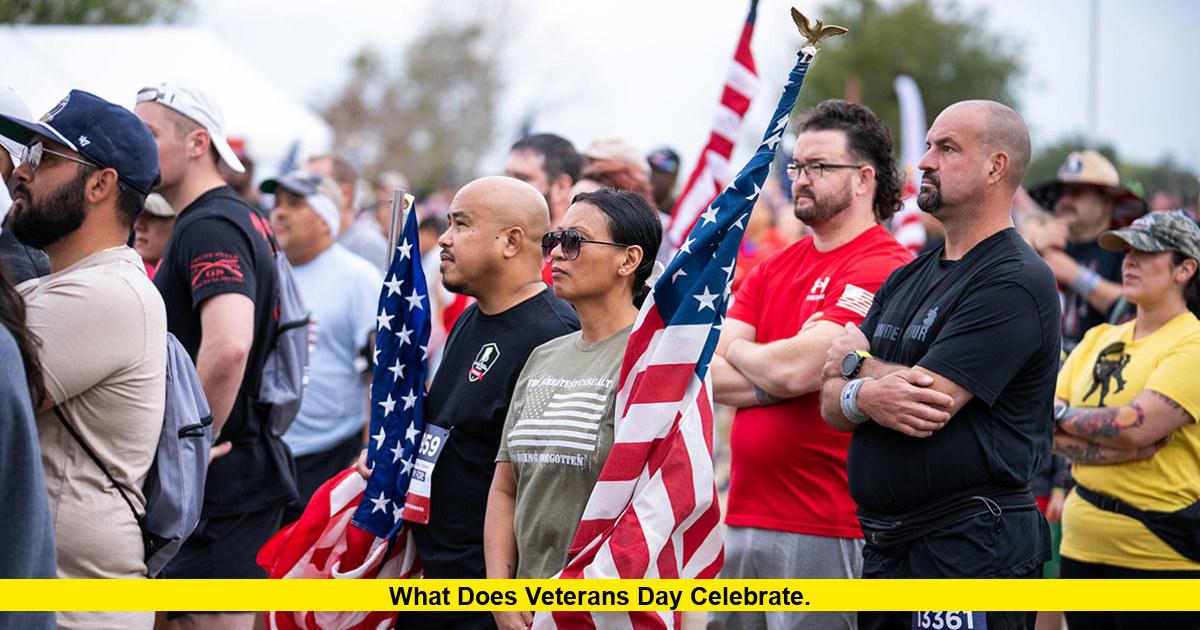
What does Veterans Day celebrate? It honors every man and woman who has served honorably in the United States Armed Forces—whether in wartime or peacetime, and whether living or deceased. Observed every November 11, the federal holiday focuses especially on thanking living veterans for their patriotism, love of country, and willingness to serve and sacrifice for the common good.
Unlike a day of mourning, Veterans Day is a celebration of service itself. It recognizes the millions of Americans who have worn the uniform and helped safeguard the nation’s freedoms for more than 250 years.
What Veterans Day Celebrates
Veterans Day is the nation’s dedicated opportunity to express gratitude to all who have served in the Army, Marine Corps, Navy, Air Force, Space Force, and Coast Guard. The U.S. Department of Veterans Affairs describes it as a celebration to honor America’s veterans for their patriotism, love of country, and willingness to serve and sacrifice for the common good.
The holiday is not limited to those who saw combat or to veterans of specific wars. It includes everyone who served honorably, from peacetime Cold War-era personnel to those who deployed in more recent conflicts. Official guidance emphasizes thanking living veterans while also remembering those who have passed.
President Donald J. Trump’s 2026 Veterans Day proclamation reaffirmed this purpose, encouraging Americans to reflect on veterans’ fearlessness and sacrifice through public ceremonies and private expressions of gratitude, and calling on officials to display the American flag and support community observances.
The Origins of Veterans Day: From Armistice Day to Today
Veterans Day traces directly to the end of World War I. Fighting ceased on November 11, 1918, at the eleventh hour of the eleventh day of the eleventh month, when an armistice between the Allied nations and Germany took effect. That moment is widely regarded as the end of “the war to end all wars,” even though the formal Treaty of Versailles was not signed until June 28, 1919.
President Woodrow Wilson proclaimed the first Armistice Day on November 11, 1919, calling for parades, public meetings, and a brief suspension of business at 11 a.m. The day was initially focused on World War I veterans and the cause of world peace.
In 1938, Congress made November 11 a legal federal holiday known as Armistice Day. After World War II and the Korean War dramatically expanded the number of American veterans, Congress acted again. On June 1, 1954, President Dwight D. Eisenhower signed legislation that replaced the word “Armistice” with “Veterans,” transforming the holiday into one that honors American veterans of all wars.
A detailed official timeline is available on the U.S. Department of Veterans Affairs history page.
From 1971 to 1977, the holiday was temporarily moved to the fourth Monday in October under a law intended to create three-day weekends. The change proved unpopular because it severed the connection to the historic date of November 11. In 1975, President Gerald R. Ford signed legislation returning the observance to November 11 beginning in 1978, where it has remained.
Veterans Day vs. Memorial Day: Key Differences
Many Americans confuse the two holidays, but their purposes are distinct.
Memorial Day, observed on the last Monday in May, specifically honors military personnel who died in service to the country, particularly those who died in battle or from wounds sustained in battle. It has roots in the Civil War-era tradition of decorating graves.
Veterans Day thanks and honors all who served honorably—living and deceased—while focusing primarily on expressing appreciation to living veterans. As the VA notes, it underscores that everyone who served has sacrificed and done their duty, not only those who made the ultimate sacrifice.
The VA provides a clear official comparison on its facts and information page.
How Americans Observe Veterans Day
Veterans Day is a federal holiday. Federal offices, post offices, and most banks are closed. Many schools and some private businesses also close or offer modified schedules, though practices vary by state and locality.
The centerpiece of national observance is the Veterans Day National Ceremony at Arlington National Cemetery. It begins at 11 a.m. with a wreath-laying at the Tomb of the Unknown Soldier, followed by a parade of colors and remarks inside the Memorial Amphitheater. Communities across the country host parades, ceremonies, flag displays, school programs, and concerts.
In 2026, Veterans Day falls on Wednesday, November 11. Because the date lands on a weekday, federal offices observe the holiday on that day with no substitute Monday or Friday.
The Department of Veterans Affairs coordinates national planning through the Veterans Day National Committee and provides resources for communities and educators on its main Veterans Day page.
Practical Ways to Honor Veterans
Meaningful observance does not require attending a large ceremony. Simple, respectful actions include:
- Thanking a veteran in person or with a note or call.
- Flying the American flag.
- Attending a local parade or ceremony.
- Visiting a veterans’ memorial or cemetery.
- Supporting veteran service organizations or volunteering time.
- Sharing a veteran’s story with younger family members.
Businesses often offer free meals or discounts to veterans and active-duty personnel. Checking local listings in advance helps families plan participation.
Why the Holiday Matters for Americans Today
Veterans Day keeps the focus on living service members who continue to contribute to their communities after leaving the military. It also preserves the historical significance of November 11 while broadening recognition beyond any single war. For families of veterans, the day offers a public acknowledgment of private sacrifices made over generations.
Officials and communities continue to use the holiday to highlight benefits, employment opportunities, and support available through the Department of Veterans Affairs, reinforcing that gratitude includes practical support year-round.
How does your community observe Veterans Day, and which local traditions do you value most? Share your experiences below.