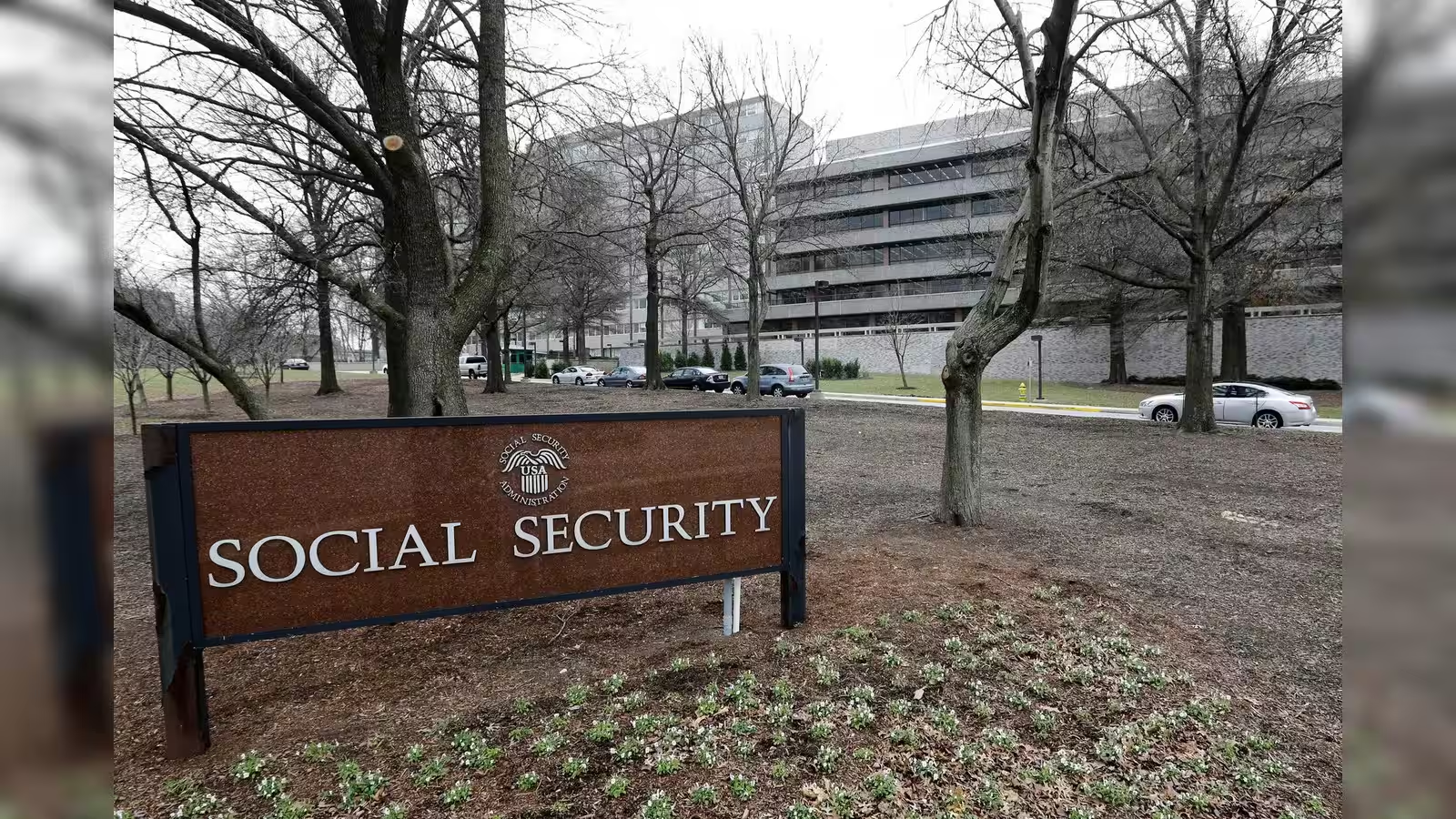
The latest projections show Social Security Trust Fund Depletion for the combined retirement and disability funds in the third quarter of 2034. At that point, continuing income would cover about 83 percent of scheduled benefits if Congress does not act. This is the central finding of the 2026 Social Security Trustees Report, released in June.
These are projections under intermediate (best-estimate) assumptions based on current law, not certainties. Actual results will depend on future economic conditions, birth rates, immigration, longevity, and any changes lawmakers make.
What the 2026 Trustees Report Says About Social Security Trust Fund Depletion
The Board of Trustees released its annual report in June 2026. Under the intermediate assumptions, the combined Old-Age and Survivors Insurance (OASI) and Disability Insurance (DI) Trust Funds are projected to have enough dedicated revenue to pay all scheduled benefits until 2034. After depletion, ongoing payroll taxes and other income would pay 83 percent of scheduled benefits. That percentage is projected to fall gradually to about 65 percent by 2100.
The OASI Trust Fund, which pays retirement and survivor benefits, faces earlier pressure. Its reserves are projected to be depleted in the fourth quarter of 2032. At that time, continuing income would cover roughly 78 percent of scheduled OASI benefits. The DI Trust Fund is projected to remain solvent throughout the entire 75-year projection period ending in 2100.
Combined reserves declined by $160 billion in 2025, ending the year at $2.56 trillion. In 2025, total income to the combined funds was $1.45 trillion (including $1.32 trillion from payroll taxes, $58 billion from taxation of benefits, and $69 billion in interest). Total expenditures were $1.61 trillion, with benefits accounting for the large majority. Program costs have exceeded non-interest income since 2010 and total income since 2021. Costs are projected to exceed income in 2026 and every year thereafter under current law.
For the official announcement, see the Social Security Administration’s June 2026 press release. The full details appear in the 2026 OASDI Trustees Report.
How the Trust Funds Work and Why Depletion Is Projected
Social Security is primarily funded by a 12.4 percent payroll tax (6.2 percent from employees and 6.2 percent from employers) on earnings up to the annual wage base. For 2026, that wage base is $184,500. Self-employed workers pay the full 12.4 percent on net earnings up to the same limit. Additional revenue comes from taxation of some benefits and interest earned on the trust fund reserves, which are invested in special-issue U.S. Treasury securities.
The system has long been structured as a pay-as-you-go program with reserves that build up during periods of surplus and are drawn down when costs exceed income. Demographic shifts—lower fertility rates, longer life expectancies, and the retirement of large cohorts—have increased the number of beneficiaries relative to workers paying in. Recent assumptions about lower immigration and the effects of 2025 tax legislation (which reduced expected revenue from taxation of benefits) also worsened the long-range outlook compared with the prior year.
The 75-year actuarial deficit for the combined OASDI program stands at 4.42 percent of taxable payroll, up from 3.82 percent in the previous report. Closing this gap would require either higher revenue, lower benefits, or a combination of both. The Congressional Research Service summarized these findings in its analysis of the 2026 report; readers can review that overview at Congress.gov.
What Happens After the Reserves Are Depleted
Depletion does not mean Social Security stops paying benefits. It means the program can no longer draw on accumulated reserves and must operate solely on incoming revenue. Under current law, the Social Security Administration would not have legal authority to pay full scheduled benefits once reserves are exhausted. Benefits would continue at a reduced level equal to the amount of ongoing income.
For the combined funds, that reduction is projected at about 17 percent initially (paying 83 percent of scheduled benefits) starting in 2034. For the OASI fund alone, the reduction would be larger, around 22 percent (paying 78 percent), beginning in late 2032. These percentages would continue to decline over time under the intermediate assumptions. Disability benefits are in a stronger position because the DI Trust Fund is projected to remain positive for decades.
The two funds are legally separate. Transfers between them require an act of Congress. Policymakers have reallocated payroll tax revenue between the funds in the past, which is why many analyses focus on the combined projection.
What This Means for Current and Future Beneficiaries
Roughly 70 million people were receiving Social Security benefits in current-payment status by late 2025 and into 2026, the large majority of them retired workers. Average monthly benefits vary widely by type of beneficiary, age, and work history. A reduction in payable benefits would affect nearly all recipients unless Congress intervenes before the depletion dates.
Workers approaching retirement face decisions about when to claim benefits. Claiming early (as early as age 62) results in permanently reduced monthly payments, while delaying past full retirement age increases them. The projected shortfall adds uncertainty to those calculations. Younger workers may see higher payroll taxes, a higher retirement age, or lower replacement rates over their careers if reforms are enacted later.
Cost-of-living adjustments (COLAs) continue under current law and are based on changes in the Consumer Price Index. They do not solve the underlying financing gap. Readers should review their personal earnings records and projected benefits through their my Social Security accounts and consider how a potential reduction would affect household budgets.
Possible Paths to Address the Shortfall
Lawmakers have a range of options that have been discussed for years. These include raising the taxable wage base or the payroll tax rate, adjusting the benefit formula, increasing the full retirement age further, changing how COLAs are calculated, or some combination of revenue increases and benefit adjustments. Past major reforms, most notably in 1983, combined tax increases and gradual benefit changes.
The Trustees emphasize that timely action allows changes to be phased in more gradually. Waiting until the reserves are nearly depleted would require larger or more abrupt adjustments. The Treasury Department’s summary of the 2026 reports notes that both Social Security and Medicare continue to face significant financing challenges.
What to Watch Next
The next annual Trustees Report is expected in mid-2027. It will incorporate updated economic data, demographic assumptions, and any legislative changes. Readers should also monitor congressional proposals and hearings on Social Security financing. In the meantime, the program continues to pay full benefits on schedule while drawing down reserves.
Frequently Asked Questions
A frequent question is whether Social Security will completely run out of money. The answer is no. After the projected depletion dates, ongoing payroll tax revenue and other income will still fund a substantial portion of benefits—approximately 83 percent for the combined funds in 2034 or 78 percent for the OASI fund in late 2032 under the intermediate assumptions.
Another common concern is how soon cuts could happen. The earliest projected pressure is on the OASI fund in the fourth quarter of 2032. The combined funds are projected to last until the third quarter of 2034. These dates can shift with new economic data or legislation.
People also ask whether Congress is required to act. There is no automatic mechanism that forces full benefits to continue once reserves are gone. Without new legislation, payable benefits would be limited to available income. Lawmakers have historically acted before major shortfalls materialized, but the timeline is now measured in single-digit years.
Finally, readers wonder what individuals can do. Reviewing personal benefit estimates, maximizing earnings subject to the tax (up to the wage base), and building other savings remain practical steps. Staying informed about both the annual Trustees updates and any legislative proposals provides the clearest picture of how the program may change.
The 2026 projections show that the window for gradual reforms is narrowing, while the program continues to deliver monthly payments to tens of millions of Americans.
What steps do you think Congress should take before the projected depletion dates, and how are you planning for possible changes in benefits? Share your views in the comments and stay tuned for updates on the next Trustees Report.