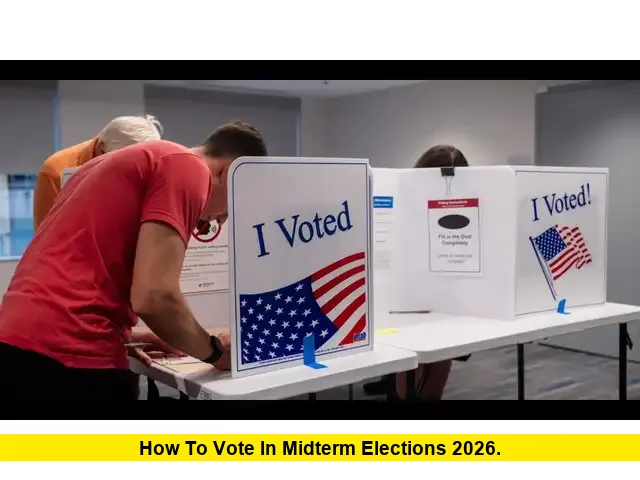
Knowing how to vote in midterm elections 2026 starts with one date: Tuesday, November 3, 2026. Voting rules differ from state to state, and some registration deadlines have already passed. This guide covers registration, early voting, mail ballots, voter ID and the newest court rulings, so you can build a plan with about two weeks left.
Midterm Election Day 2026 at a Glance
Election Day falls on the first Tuesday after the first Monday in November. Voters will decide all 435 seats in the U.S. House of Representatives and about one-third of the Senate. Many states will also elect governors, state lawmakers and local officials, and some ballots include statewide measures.
No single national rulebook governs how Americans vote. Each state sets its own registration deadlines, early voting calendars, ID rules and mail ballot return dates. Your state or county election office has the final word for your address.
Who can vote
Most states require voters to be U.S. citizens, at least 18 years old by Election Day and residents of the state. Some states add a short residency period. Montana, for example, asks for 30 days. Michigan lets residents as young as 16 pre-register, though they cannot cast a ballot until they turn 18.
Rules on voting after a felony conviction also vary by state. If that applies to you, check with your local election office before assuming you are ineligible.
Step One: Check or Complete Your Voter Registration
Start by confirming that you are registered at your current address. The federal government’s official voting website and every state election office offer free lookup tools. Check this especially if you moved, changed your name or skipped recent elections.
Updating your mailing address with the Postal Service does not update your voter registration. You must submit a registration update through your state or county election office.
Registration deadlines in 2026
There is no national deadline. Some states close registration as early as 30 days before the election, while others run right up to Election Day. Texas closed registration on October 5, 2026. Pennsylvania’s deadline was October 19, 2026. Massachusetts closes on October 24, 2026.
Same-day registration
About 20 states and the District of Columbia let eligible residents register and vote at the same time. In some places, that option exists only during the early voting period. In others, it continues through Election Day at designated sites. Bring proof of residence, since poll workers will ask for it.
North Dakota is the only state that does not require voter registration. If your state has no same-day option and your deadline has passed, you will likely have to wait for the next election.
Choose How You Will Vote: Early, By Mail or In Person
Voters have three main options. The best choice depends on your schedule, your state’s rules and how soon you want your ballot counted. Whichever route you pick, a plan made now beats a scramble on November 3.
Early in-person voting
Most states offer some form of early voting, and it has already started in several of them. Texas runs early voting from October 19 through October 30, 2026. North Carolina’s early voting period runs from October 15 through October 31, 2026. Massachusetts offers it from October 17 through October 30, 2026.
Hours and locations vary by county. Your early voting site may differ from your Election Day polling place, so confirm both. Voting early often means shorter lines and extra time to fix any problem.
Voting by mail
Mail voting rules vary widely. Michigan and North Carolina let any registered voter request a mail ballot. Nevada automatically mails a ballot to every active registered voter. Texas, by contrast, limits mail voting to specific groups, including voters 65 and older and voters with disabilities. Texas mail ballot applications had to reach county officials by October 23, 2026.
Return deadlines matter just as much. Arizona requires mail ballots to arrive by 7 p.m. on Election Day. Michigan sets the cutoff at 8 p.m. Pennsylvania also requires ballots back by November 3. Follow the envelope instructions exactly, including any signature or witness line, because errors can get a ballot rejected.
Voting in person on Election Day
Polling hours differ by state. Texas polls open from 7 a.m. to 7 p.m. North Carolina polls open from 6:30 a.m. to 7:30 p.m. If you are standing in line when polls close, you can still vote. Stay in line.
Many states require you to vote at an assigned precinct on Election Day. Use your state’s polling place lookup rather than relying on where you voted in the past. Some counties use vote centers that accept any voter in the county.
What ID to Bring to the Polls
Thirty-six states ask voters to show some form of identification at the polls. Twenty-four of them require photo ID, such as a driver’s license or passport. The other 12 accept some non-photo documents. The remaining states verify identity through other steps, such as signature matching.
Voters who arrive without acceptable ID can usually cast a provisional ballot. In strict states, that ballot counts only if the voter proves their identity within a short window afterward. Deadlines vary. Alabama voters have until 5 p.m. on the Friday after the election. North Carolina voters must bring ID to the county board before canvass.
New ID rules this year
Several states changed their rules since the last midterms. Tennessee and West Virginia now have photo ID requirements in effect. Indiana, Montana and New Hampshire no longer accept student IDs. Iowa ended its option for another voter to vouch for someone without ID. Utah and South Dakota now require new registrants to show documents such as a passport or birth certificate.
Voting-rights researchers counted 38 new laws in 21 states that affect ID, registration or mail ballots this cycle. Most voters will not face new barriers. Even so, check your state’s current list of accepted IDs before you head out.
Why This Midterm Matters
The results will help determine which party controls Congress for the next two years. Early voting turnout and enthusiasm have already drawn national attention. Control of the House and Senate shapes federal spending, immigration policy, health care rules and more.
Voting access is a central debate this year. At least seven states have voter ID measures on their ballots, the largest number in a single year. Arizona, Nevada and North Carolina are among them. Those measures would affect future elections, not the rules for November 3.
Local races deserve attention too. School boards, county offices and city councils often decide issues that touch daily life. Look up a sample ballot ahead of time so you know every contest and measure before you arrive.
Latest Updates on Voting Rules
Several court rulings and federal actions have shaped the voting landscape in recent months. Here is where things stand as of October 20, 2026.
Mail voting order blocked
President Donald Trump signed an executive order in March 2026 aimed at restricting mail voting. It directed the Postal Service to deliver ballots only to voters on state-supplied lists. Federal courts blocked it. On September 14, 2026, the Supreme Court left in place a ruling that stops the Postal Service from enforcing its new mail ballot rules this year. Justices Samuel Alito and Clarence Thomas dissented. Mail ballots should move through the mail as usual for this election.
Late-arriving ballots
On June 29, 2026, the Supreme Court ruled 5-4 in Watson v. Republican National Committee that federal law does not stop states from counting ballots postmarked by Election Day and received afterward. Each state still sets its own rule. Mississippi allows five days, and California allows seven. Arizona, Michigan and Pennsylvania still require ballots to arrive by Election Day, so no grace period applies there.
Postmark warning
A Postal Service rule that took effect on December 24, 2025 says a postmark may not match the day you drop off mail. That matters in states with grace periods. The Postal Service recommends mailing ballots at least a week early. You can also ask for a manual postmark at a post office counter. Many election officials suggest using a drop box or returning the ballot in person instead.
SAVE America Act stalled
The House passed the SAVE America Act, 218-213, in February 2026. It would require photo ID to vote and proof of citizenship to register in federal elections. The Senate has not passed it. A Senate vote on the voter ID portion failed on August 8, 2026. Supporters have said they may try again through the budget process, but there is no confirmation that any such change will happen before November 3. For now, no nationwide voter ID requirement applies, and state rules govern.
A federal court also permanently blocked Trump’s 2025 election executive order in January 2026.
Final Thoughts
Voting in the 2026 midterms comes down to a handful of simple steps. Most problems come from missed deadlines, wrong polling places and missing ID. A few minutes of checking now can prevent them.
Use this short checklist:
- Confirm your registration and address with your state election office.
- Decide whether to vote early, by mail or on Election Day.
- Request and return any mail ballot as early as possible, or use a drop box.
- Check your state’s accepted ID list and bring it.
- Find your assigned polling place and its hours.
Rules and court decisions can shift quickly in the final days before an election. Treat your state or county election office as the final source for dates and requirements where you live.
Have a question about voting in your state? Share it in the comments and check back for the latest updates before Election Day.