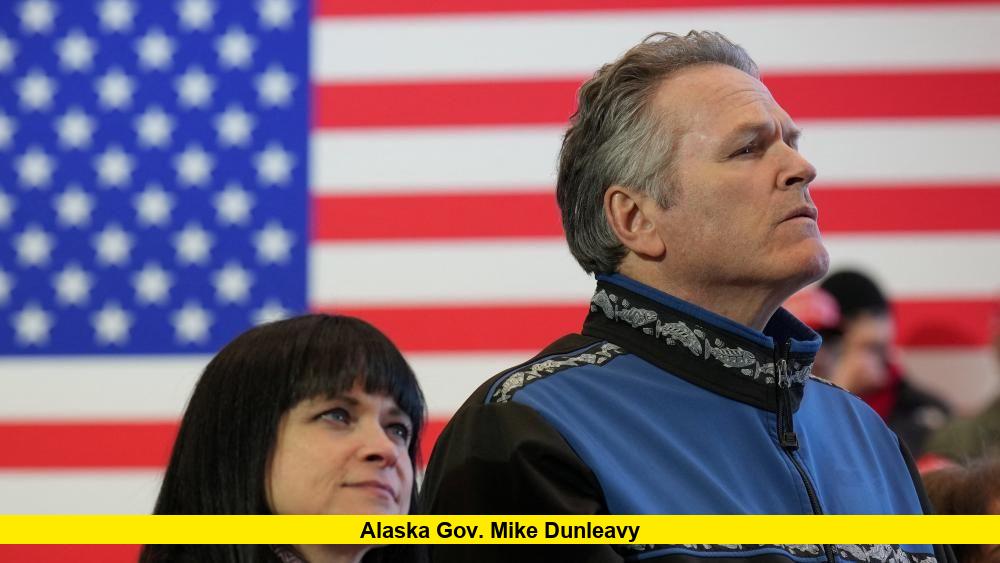
Alaska Gov. Mike Dunleavy ordered an investigation late Wednesday into whether Democrats tried to confuse voters in the state’s U.S. Senate race. The probe will examine whether criminal charges or civil action are warranted. It follows a New York Times report on an alleged plan to put a second candidate named Dan Sullivan on the ballot against Republican Sen. Dan Sullivan. Election Day is November 3, less than a week away.
What Happened Wednesday Night
The governor announced the order on X after the Times published its story. He said the report revealed disturbing new evidence of an organized effort to manipulate Alaska elections. In his view, recruiting candidates, including one who shares the incumbent’s name, aimed to misdirect votes.
Dunleavy framed the issue as a voter-rights question. Alaskans, he said, have a fundamental right to vote for the candidate they actually intend to support. He added that anyone who broke the law must face accountability.
He stopped short of naming a verdict. “The evidence will determine what happens next,” he wrote.
What the New York Times Reported
The Times story carried the headline “Inside Democrats’ Secret Effort to Stack Alaska’s Ballot.” Its reporting described a plan that went beyond one candidate. The newspaper found that the push to recruit candidates was much broader than the second Sullivan alone.
The story centers on Daniel J. Sullivan, a retired teacher from Petersburg. He appears on the ballot as a moderate Republican. The Times reported that campaign staff combed through voter records to find a person with the incumbent’s name.
Daniel J. Sullivan maintains he is a serious candidate. He has said he trusts Alaska voters to tell the two men apart.
Peltola Campaign and National Democrats Deny the Claims
Democratic nominee Mary Peltola, a former U.S. House member who served from 2022 to 2025, faces the incumbent in November. Her campaign denied any involvement in Daniel J. Sullivan’s candidacy. The Democratic Senatorial Campaign Committee issued the same denial.
Both groups also told the Times they did not recruit other candidates into the race. That denial directly contradicts the broader claim in the report.
The dispute now turns on evidence. Investigators will need to establish who contacted whom and what each person knew.
Why Two Dan Sullivans Appear on the Ballot
The name overlap has stirred controversy for months. Alaska’s lieutenant governor’s office announced an investigation on May 29 into whether Daniel J. Sullivan’s filing was valid. Incumbent Sen. Dan Sullivan had raised complaints about the filing.
The Alaska Division of Elections then examined the matter in June. Its director concluded the filing aimed to confuse or mislead the electorate. She pointed to several facts:
- He first asked to appear as “Dan S. Sullivan,” and the “S” is the senator’s middle initial, not his.
- He had never before used the name “Dan Sullivan” in that form.
- He had never before declared a Republican affiliation.
The division removed him from the ballot. A trial court reversed that decision. The Alaska Supreme Court affirmed the reversal, and he stayed on the ballot.
Is Ballot Stacking Illegal?
Ballot stacking means placing spoiler candidates on a ballot to pull votes from a rival. Courts and political experts generally treat the tactic as legal. Both parties have used it in Alaska.
That fact shapes the new probe. The question for investigators is not whether recruiting a candidate is allowed. Instead, they must decide whether anyone broke a specific law by deliberately deceiving voters.
Some Democrats have pointed to past Republican examples of similar tactics. Others have declined to defend the alleged actions outright.
Trump and the Justice Department Raise the Stakes
President Donald Trump entered the fight on Wednesday. He said Peltola should drop out of the race and face criminal charges. He also called the second Sullivan’s presence on the ballot cheating at a rally in Alaska last week.
The federal government is already involved. The Justice Department sued Alaska on Thursday, October 22, in federal court in Alaska. The suit asks a judge to block certification of a Peltola win if Daniel J. Sullivan stays on the ballot. It also seeks to block certification if an investigation finds that votes cast for him could have changed the result.
Trump said Friday that he ordered the lawsuit. The Democratic Senatorial Campaign Committee called it a sham effort to overturn the will of Alaska voters.
State election officials oppose the federal action. They said the new Times revelations do not change their position. The Division of Elections says the Alaska Supreme Court’s order binds it, and it remains committed to running a fair election.
How Ranked-Choice Voting Fits In
Alaska uses ranked-choice voting in general elections. Voters can rank candidates in order of preference. That detail matters here.
A voter who wants Sen. Dan Sullivan could mistakenly mark Daniel J. Sullivan instead. Under ranked-choice rules, a voter can also rank both men. The lawsuit’s theory depends on whether enough mistaken votes could change the outcome.
Proving that would be difficult. Investigators would need to show intent among voters, not only a similar name on the ballot.
Key Dates in the Alaska Senate Ballot Dispute
| Date | Development |
|---|---|
| May 29 | Lieutenant governor’s office announces an investigation into Daniel J. Sullivan’s candidacy |
| June | Division of Elections director finds the filing meant to mislead voters |
| Summer | Trial court reverses the removal, and the Alaska Supreme Court affirms |
| October 22 | Justice Department sues in federal court in Alaska |
| October 23 | Trump says he ordered the lawsuit |
| October 28 | Times report published, Trump urges Peltola to drop out, Dunleavy orders a probe |
| November 3 | Election Day |
Where the Senate Race Stands
The contest ranks among the most competitive Senate races in the country. Alaska has voted for Trump in all three of his presidential runs. Even so, recent polling shows a tight race.
A June New York Times/Siena College poll gave Sen. Dan Sullivan a narrow two-point lead. A more recent AARP survey showed Peltola ahead. Peltola also earned more votes than the incumbent in the August primary.
The new allegations land at a sensitive moment. Early and absentee voting is already underway. Campaigns are making their final pushes.
What Happens Next
The investigation’s findings will drive the next steps. Dunleavy said the review will determine whether Alaska laws were broken. Possible outcomes range from no action to criminal charges or civil penalties.
Several questions remain open. Investigators have not publicly released evidence. The Peltola campaign and national Democrats continue to deny the claims. Meanwhile, the federal lawsuit moves forward in court.
A ruling on certification could arrive after Election Day. Close races in Alaska often take time to finalize because of the ranked-choice count and mail ballots. Any legal fight over the result could stretch well beyond November 3.
For now, voters face a ballot with two men named Dan Sullivan. Election officials urge Alaskans to read the ballot carefully and confirm their choices before submitting it.
Do you think the probe will change how Alaskans vote on November 3? Share your thoughts in the comments and check back for the latest updates on this developing story.