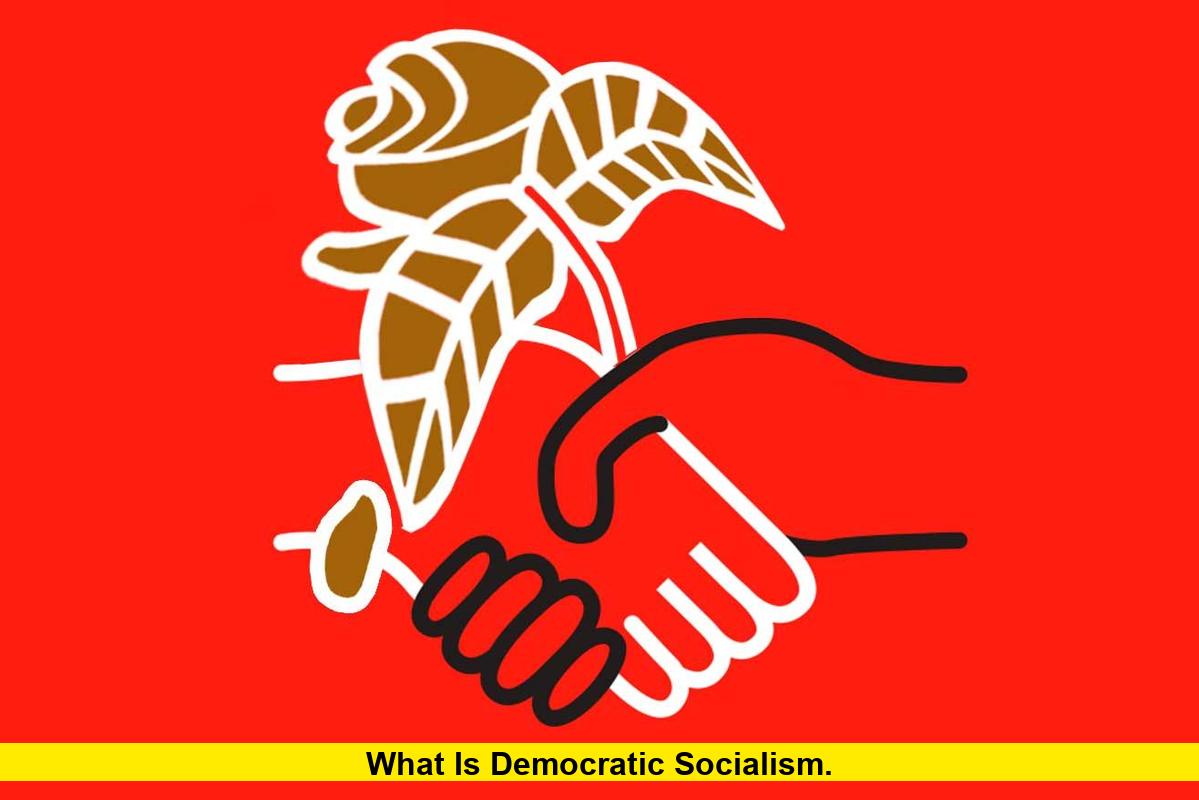
What is democratic socialism? According to political scientists, historical texts, and major American socialist organizations, democratic socialism is a political and economic philosophy that advocates for a democratically elected government alongside a socially or publicly owned economy. Unlike authoritarian state socialism, which relies on centralized, single-party rule, democratic socialists believe both the government and the economy should be run democratically to meet public needs rather than generate private corporate profit.
In the United States, the term has surged into mainstream political debate over the past decade, driven largely by the presidential campaigns of Senator Bernie Sanders and the rise of progressive lawmakers in the U.S. House of Representatives. Yet definitions frequently blur in cable news debates and campaign ads, leaving many voters unsure how the ideology actually works, how it differs from European welfare states, and how much real legislative power its adherents hold in Washington.
Core Principles: How Democratic Socialism Works in Theory
At its foundation, democratic socialism seeks to extend democratic decision-making from the voting booth into the workplace and broader economy. Proponents argue that extreme concentrations of corporate wealth undermine true political democracy by giving billionaires and major industries disproportionate influence over legislation.
According to policy platforms published by American democratic socialist groups, the ideology centers on several core pillars:
- Decommodification of Basic Needs: Essential goods and services—such as healthcare, higher education, childcare, and clean energy—should be guaranteed as public rights rather than sold as profit-driven commodities.
- Workplace Democracy: Rather than having corporations controlled exclusively by private shareholders, democratic socialists favor worker-owned cooperatives, strong labor unions, and employee representation on corporate boards.
- Public Ownership of Key Sectors: While small businesses and personal property remain privately owned, vital infrastructure—including public transit, electrical utilities, broadband networks, and banking—would transition toward municipal, state, or federal ownership.
- Progressive Taxation: Funding universal public programs relies on steep marginal tax rates on high earners, wealth taxes, and higher corporate tax rates.
Social Democracy vs. Democratic Socialism: What Is the Difference?
One of the most common points of confusion in American political discourse is the distinction between social democracy vs democratic socialism. Even prominent U.S. politicians frequently use the terms interchangeably, though political theorists draw a clear line between the two.
| Feature | Social Democracy | Democratic Socialism |
| View of Capitalism | Reforms and regulates capitalism to soften inequality. | Seeks to gradually replace capitalism with a socialist economy. |
| Ownership of Industry | Mostly private corporations alongside a strong welfare state. | Public, municipal, or worker-cooperative ownership of major industries. |
| Historical Examples | Nordic countries (Sweden, Norway, Denmark) post-WWII. | No full modern national model; partial elements seen in municipal utilities and co-ops. |
| U.S. Policy Equivalents | Medicare, Social Security, subsidized college, paid family leave. | Medicare for All paired with nationalized utilities and worker-owned enterprises. |
In short, social democracy accepts a capitalist market economy while using taxes and regulations to fund a robust social safety net. Democratic socialism, by contrast, views social safety nets as a stepping stone toward systematically shifting economic ownership away from private capital and toward workers and the public.
Who Are the Democratic Socialists of America (DSA)?
When Americans discuss organized democratic socialism today, they are most often referring to the Democratic Socialists of America (DSA). Founded in 1982 through a merger of the Democratic Socialist Organizing Committee and the New American Movement, the organization operated for decades as a small activist network before experiencing rapid growth following the 2016 presidential primary.
Key facts about the DSA include:
- Not a Separate Political Party: The DSA is a political nonprofit organization, not a ballot-qualified third party. Most DSA-endorsed candidates run on the Democratic Party ballot line in primary and general elections.
- Membership Scale: According to the organization’s national convention reports, DSA membership grew from roughly 5,000 members in 2015 to a peak of more than 90,000 dues-paying members in the early 2020s, making it the largest socialist organization in the United States since the early 20th century.
- Decentralized Chapters: The group operates through hundreds of local chapters across all 50 states, focusing on municipal housing ordinances, tenant unions, labor strikes, and local city council races.
How Many Democratic Socialists Are in Congress?
Voters frequently ask how many democratic socialists are in Congress to gauge the movement’s actual legislative footprint on Capitol Hill. While dozens of lawmakers belong to the broader Congressional Progressive Caucus, only a small, distinct group explicitly identifies as democratic socialists or holds formal endorsement from the DSA.
In the 119th Congress (2025–2027), the core bloc of self-identified democratic socialists includes:
- Sen. Bernie Sanders (I-VT): An independent who caucuses with Senate Democrats, Sanders has identified as a democratic socialist throughout his political career, including during his tenure as Mayor of Burlington, Vermont, in the 1980s.
- Rep. Alexandria Ocasio-Cortez (D-NY): Representing New York’s 14th Congressional District (parts of the Bronx and Queens), she is the most prominent DSA member in the House of Representatives.
- Rep. Rashida Tlaib (D-MI): Representing Michigan’s 12th Congressional District (including parts of Detroit and Dearborn), Tlaib is a longtime DSA member.
- Rep. Greg Casar (D-TX): Representing Texas’s 35th Congressional District (spanning parts of Austin and San Antonio), Casar is a former Austin City Council member affiliated with the DSA.
- Rep. Summer Lee (D-PA): Representing Pennsylvania’s 12th Congressional District (including Pittsburgh), Lee won her seat with strong backing from local DSA chapters.
(Note: Former DSA-endorsed House members Jamaal Bowman of New York and Cori Bush of Missouri exited Congress in January 2025 after losing their 2024 Democratic primary elections, slightly shrinking the group’s formal House roster.)
While this bloc represents roughly 1% of the 535 voting members of Congress, its influence often exceeds its headcount during close House floor votes and party platform negotiations. Official legislative records and caucus rosters can be verified directly through
Criticism, Legal Hurdles, and the U.S. Political Debate
Democratic socialism faces sustained opposition from both conservatives and moderate Democrats, who argue that its economic prescriptions are unworkable and incompatible with American constitutional and economic traditions.
- Economic Concerns: Free-market economists and business groups warn that steep corporate taxes, price controls, and public takeovers of private industries would stifle innovation, reduce capital investment, and slow job growth.
- Fiscal Cost: Nonpartisan budget analysts, including the Congressional Budget Office (CBO), have noted that flagship proposals like single-payer universal healthcare would require trillions of dollars in new federal tax revenue, even if they reduce out-of-pocket household medical spending.
- Constitutional and Legal Limits: Implementing large-scale public ownership or wealth taxes in the United States faces major legal hurdles under the Fifth Amendment’s Takings Clause and Supreme Court precedent regarding federal taxing powers—areas of constitutional and statutory framework .
- Historical Associations: Critics also argue that centralized economic planning inevitably concentrates too much power in the hands of government bureaucrats, pointing to economic stagnation and authoritarian abuses in 20th-century socialist states.
What This Means for U.S. Voters Going Forward
In practical terms, democratic socialism in the United States operates less as an imminent overhaul of the American economic system and more as an organized left-wing pressure bloc within state legislatures, city halls, and the Democratic Party.
For voters watching upcoming midterm and municipal elections, the most tangible impacts are appearing at the local and state levels rather than in sweeping federal laws. Ballot initiatives raising state minimum wages, municipal bond measures for public housing, local rent stabilization boards, and publicly owned electric utilities represent the primary battlegrounds where democratic socialist policies are actively being tested—and contested—across the country.
Where do you stand on democratic socialism’s growing role in U.S. politics—share your thoughts in the comments below and follow our coverage for the latest policy updates.