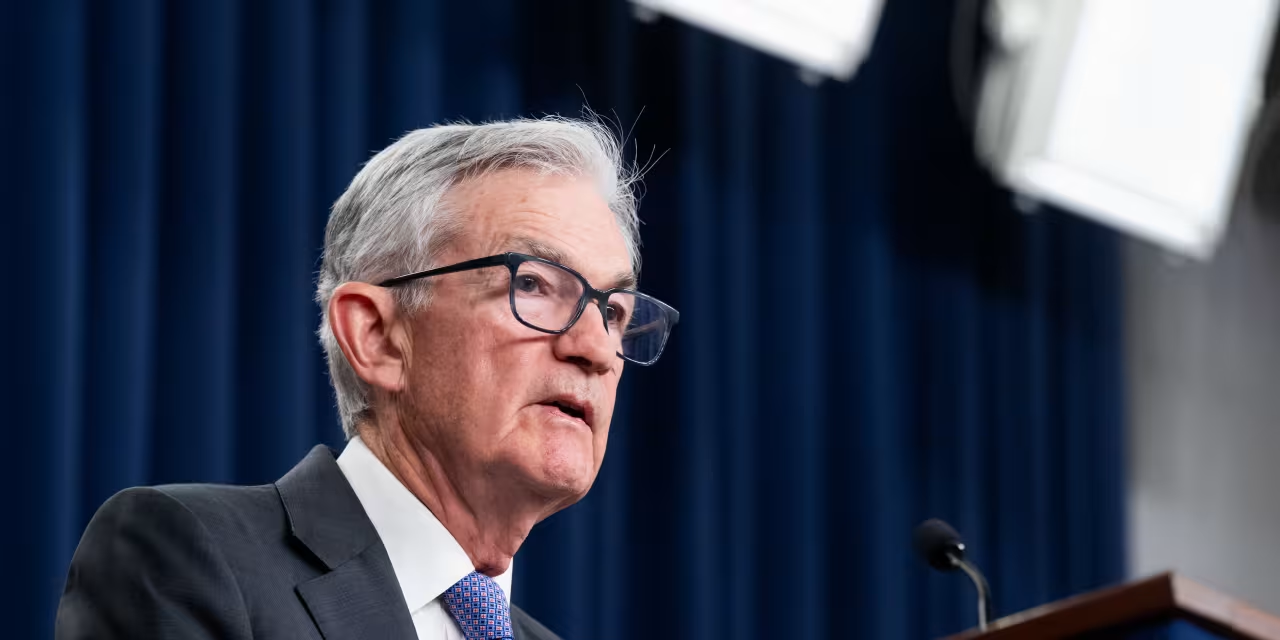
The political and financial spotlight has turned sharply toward federal reserve chair jerome powell after a dramatic court decision halted part of a Justice Department criminal investigation that has been unfolding for months.
A federal judge recently struck down subpoenas issued to the Federal Reserve as part of the probe, dealing a major setback to prosecutors and igniting nationwide debate about the independence of the central bank. The investigation centers on Jerome Powell’s testimony to Congress regarding the cost and planning of a multibillion-dollar renovation of the Federal Reserve’s historic headquarters in Washington.
The decision immediately triggered intense reactions from lawmakers, economists, and social media users, turning the legal battle into one of the most discussed financial and political stories in the United States.
If you follow economic policy or financial news, this is a developing story worth watching closely as new legal and political reactions continue to unfold.
What Started the Conversation
The situation began gaining national attention after federal prosecutors launched an investigation in late 2025 examining Powell’s testimony to Congress about the renovation of several Federal Reserve buildings in Washington, D.C.
The project, which involves restoring historic structures and modernizing their infrastructure, saw its estimated cost rise to roughly $2.5 billion. Critics questioned whether Powell’s public statements to lawmakers accurately reflected earlier renovation plans and spending estimates.
As part of the inquiry, the Justice Department issued subpoenas seeking documents and records from the Federal Reserve related to the renovation and Powell’s testimony.
Those subpoenas quickly became the center of the legal fight now dominating headlines.
1. The Court Decision That Changed the Story
A federal judge in Washington, D.C., ruled that the subpoenas issued to the Federal Reserve should be blocked, dramatically slowing the investigation.
In a strongly worded decision, the judge stated that prosecutors had presented virtually no evidence suggesting Powell committed a crime. The ruling argued that the subpoenas appeared to be aimed at pressuring the central bank rather than uncovering legitimate criminal conduct.
The decision immediately shifted the trajectory of the investigation and sparked intense political reactions across Washington.
2. Why the Investigation Began
The Justice Department probe focuses on whether Powell misled Congress when discussing the renovation project during testimony before the Senate Banking Committee in 2025.
Lawmakers questioning the Federal Reserve had raised concerns about rising costs and earlier design plans that reportedly included features later removed from the final renovation proposal.
Prosecutors sought internal Federal Reserve communications and project records to determine whether Powell’s testimony accurately described the renovation plans at the time.
However, Powell has consistently denied any wrongdoing and has defended the transparency of the project.
3. Social Media and Political Reactions Explode
Once news of the judge’s ruling became public, reactions quickly spread across social media platforms.
Financial analysts, economists, and political commentators began debating the implications of the investigation and whether it represented a challenge to the Federal Reserve’s long-standing independence.
Some posts focused on the broader economic consequences if political pressure were to influence the central bank’s decisions on interest rates.
Others discussed how rare it is for a sitting Federal Reserve chair to become the subject of a criminal investigation.
The topic quickly began trending in financial and political discussion circles online.
4. What Jerome Powell Has Said About the Investigation
Jerome Powell has repeatedly rejected accusations that he misled Congress about the renovation project.
He has argued that the Federal Reserve has consistently provided public information and updates about the renovation plans, including changes made during the project’s development.
Powell has also warned that the investigation could threaten the independence of the Federal Reserve, which economists widely view as essential to maintaining stable monetary policy.
Despite the controversy, Powell has continued performing his duties as chair of the central bank while the legal dispute plays out.
5. Why the Federal Reserve’s Independence Is a Major Issue
The case has sparked renewed debate about the role and independence of the Federal Reserve.
The central bank is responsible for setting interest rates and guiding monetary policy in the United States. These decisions influence inflation, employment, borrowing costs, and the global financial system.
Because these policies affect the broader economy, economists have long argued that the Federal Reserve must operate independently from political pressure.
The investigation into Powell has therefore raised concerns among financial leaders who worry about the precedent such legal conflicts could set.
6. The Political Stakes Behind the Investigation
The controversy is unfolding during a period of tension between policymakers and the Federal Reserve over interest-rate policy.
Some political leaders have criticized Powell for not cutting interest rates aggressively enough, arguing that lower borrowing costs would stimulate economic growth.
At the same time, the Federal Reserve must balance those concerns with the risk of inflation and financial instability.
That broader policy disagreement has intensified scrutiny of Powell and contributed to the political dimension surrounding the investigation.
What Happens Next
Although the judge blocked the subpoenas targeting the Federal Reserve, the legal fight is not necessarily over.
Prosecutors have indicated they intend to appeal the ruling, meaning the case could continue in higher courts.
Meanwhile, the leadership of the Federal Reserve is also approaching a transition point. Powell’s term as chair is scheduled to end in May 2026, though his term as a member of the Federal Reserve Board runs longer.
As legal and political developments continue, the situation surrounding the Federal Reserve and its leadership is expected to remain a major topic in economic and political discussions.
What are your thoughts on the growing debate surrounding Jerome Powell and the Federal Reserve? Join the conversation and stay tuned for the latest developments.