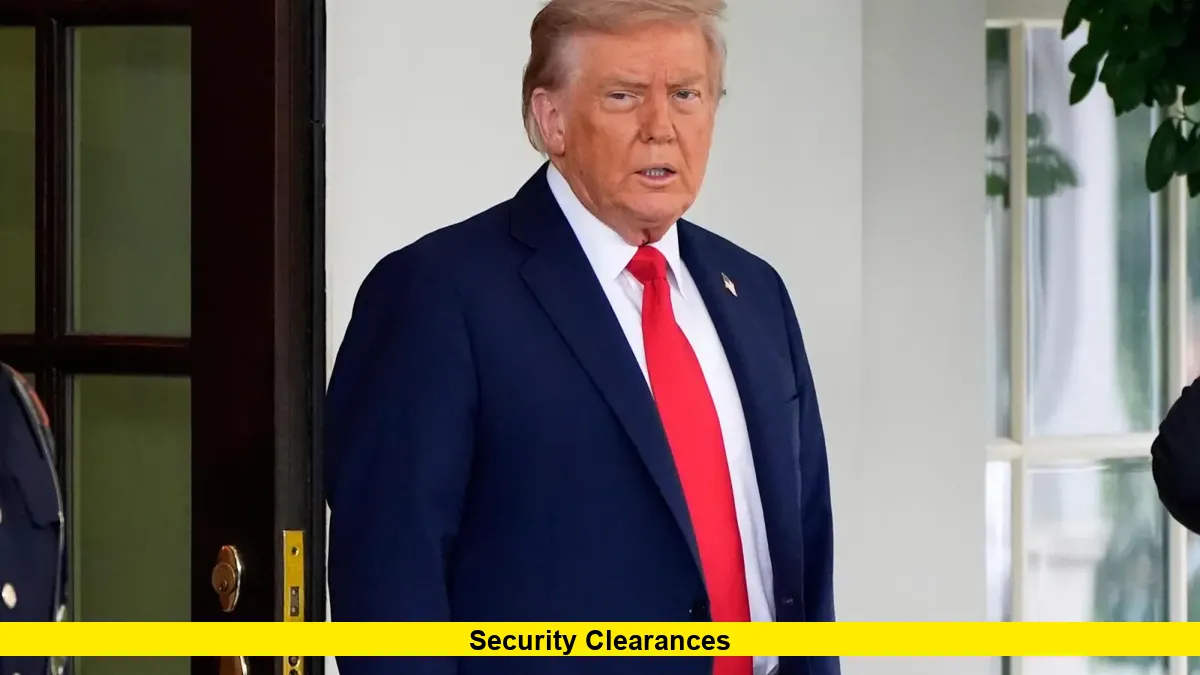
The revocation of security clearances has once again become a headline issue, as news confirms that the Trump administration moved to strip 37 U.S. officials of their access. The decision marks one of the most sweeping actions taken against current and former officials regarding their eligibility to review classified information.
The White House stated that the move was necessary in the interest of national security, citing concerns over the handling of sensitive information and the potential misuse of access privileges by individuals who no longer hold active government roles. This development has sparked intense debate in Washington, dividing critics who see the move as politically motivated from those who argue it is a protective measure intended to safeguard classified intelligence.
Why Security Clearances Matter
Security clearances allow government officials to access varying levels of classified material, depending on their role and involvement in national security matters. Typically, these clearances are retained for a period even after officials leave office, enabling them to provide counsel, oversight, or expertise.
The decision by the Trump administration to revoke 37 clearances represents a sharp departure from traditional practice. Previous administrations rarely removed such access on a large scale, making this action not only unprecedented but also a signal of changing attitudes toward control of national intelligence.
Officials Affected by This Action
Though a complete list has not been widely circulated, reports confirm that the group includes both current and former intelligence authorities, defense advisors, and diplomatic staff. Notably, the move goes beyond just high-profile individuals and also impacts mid-level officials who had been involved in sensitive operations.
Some of the better-known figures who have previously had their clearances questioned during Trump’s tenure include former CIA Director John Brennan and former FBI Deputy Director Andrew McCabe. Brennan’s case, in particular, drew national attention in 2018 when his clearance was revoked following public criticism of the administration. With this broader move, however, the revocations extend widely, magnifying the political and security implications.
Reactions and Fallout
The decision has sparked mixed reactions across government and media:
- Supporters argue that individuals who no longer serve should not retain privileged access to sensitive materials, particularly if they publicly criticize or oppose government policies. They emphasize that protecting top-secret intelligence is vital to the country’s safety.
- Critics contend that the revocations are politically motivated and intended to silence dissent. They argue that stripping clearances undermines the value of experienced voices who provide context and advice when national security challenges arise.
Civil liberties groups have already voiced concerns, stating that revoking access without clear evidence of misuse could establish a concerning precedent. Members of Congress are also pressing for more transparency, demanding details about the selection criteria used to determine whose clearance was revoked.
Political and Security Implications
The large-scale revocation underscores the continuing tension between national security protocols and political considerations. Security clearances, while procedural, have now entered the political spotlight as symbols of loyalty, trust, and influence.
This action raises several key questions:
- Will this decision discourage former officials from speaking publicly on security matters?
- Could it impact the pool of advisors available to future administrations?
- Does this set a new standard for how clearances are retained or revoked?
Many analysts believe that while the immediate impact may be minimal for day-to-day intelligence operations, the long-term effects could reshape how administrations handle access to classified information. Trust and continuity are crucial in national security, and broad revocations risk creating uncertainty within intelligence and defense communities.
Looking Ahead
In the coming weeks, attention will likely focus on whether these security clearance revocations face legal challenges. Historically, the president holds broad authority over the granting and withdrawal of clearances. However, courts may become involved if individuals claim the decision was enacted without proper justification.
This move also adds to the ongoing debate over transparency in national security decisions. With partisan divisions running deep, the broader political narrative surrounding the 37 revoked clearances will continue to dominate conversations in Washington and beyond.
Conclusion
The Trump administration’s decision to revoke the security clearances of 37 officials represents a pivotal moment in the intersection of intelligence and politics. Whether viewed as a protective measure or a political maneuver, the impact will be felt across security circles for years to come. What do you think—was this step necessary to protect national secrets, or does it undermine trusted voices in American security? Share your perspective in the comments below.