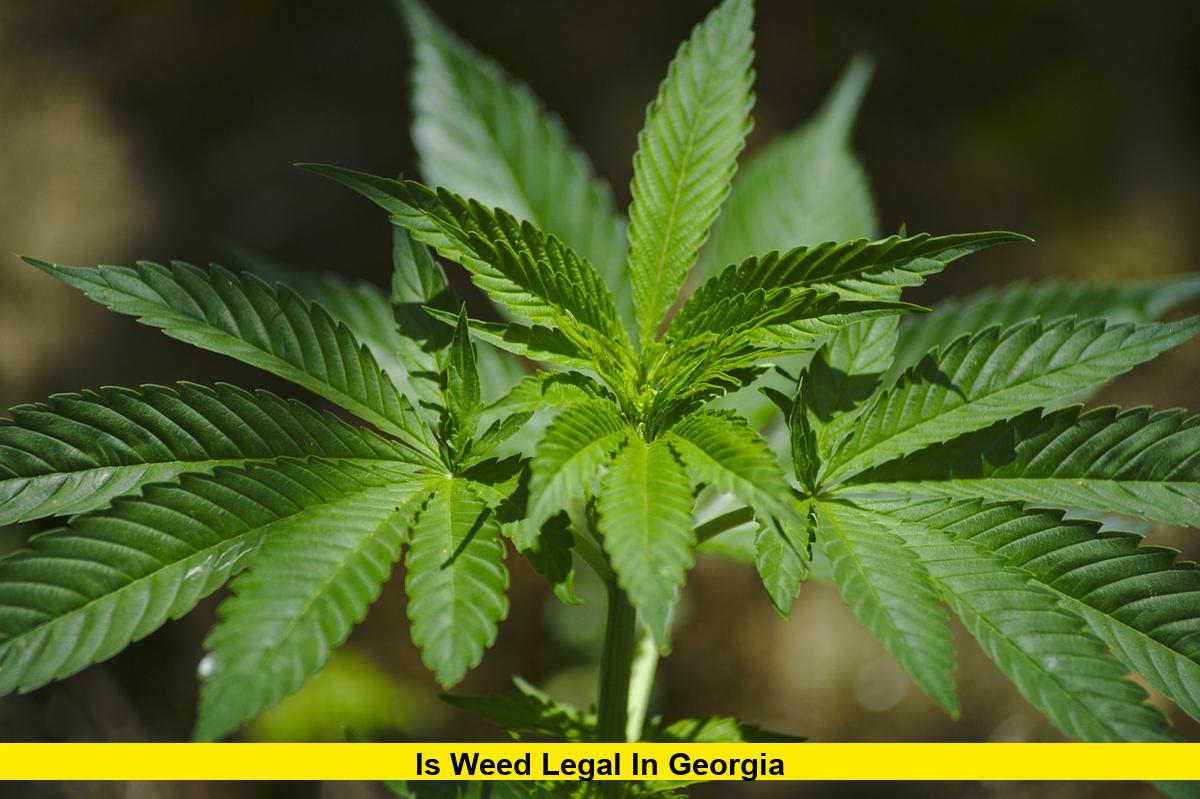
If you have been wondering whether weed is legal in Georgia, you are far from alone. With marijuana laws shifting across the country and news about federal policy changes making headlines, millions of Georgians — and visitors to the state — are asking the same question. The short, direct answer is no. Recreational marijuana remains fully illegal in Georgia in 2026, and the state’s medical cannabis program is one of the most restricted in the entire nation.
Here is everything you need to know before making any assumptions.
Ready to share this with a friend who needs to know? Pass it along — it could save someone from a serious legal headache.
Recreational Marijuana in Georgia: Still Firmly Illegal
Despite massive national momentum toward legalization, Georgia has not budged on recreational cannabis. Possession, sale, cultivation, and distribution of marijuana for adult use remain criminal offenses under the Georgia Controlled Substances Act. There is no legal dispensary where any adult can walk in off the street and buy cannabis products for recreational use, and no voter initiative to change that is currently on the 2026 ballot.
What surprises many people is how strict Georgia’s stance remains compared to neighboring states. While several states across the country have embraced adult-use cannabis, Georgia’s Republican-led legislature has shown no appetite for full legalization. Even with polls showing that roughly two-thirds of Georgians support legalizing cannabis possession, state lawmakers have not moved forward with any recreational bill. Political leadership has made clear that adult-use legalization is not a priority in the current legislative session.
What Federal Rescheduling Actually Means for Georgia Residents
A lot of confusion spread across Georgia — and the country — after news broke about the federal government’s moves to reclassify marijuana. The U.S. Drug Enforcement Administration has been exploring whether to move cannabis from Schedule I to Schedule III, which would acknowledge it has medical uses and lower its federal risk classification.
But here is what that does NOT mean: it does not make marijuana legal in Georgia. Federal rescheduling affects federal enforcement priorities, research access, and certain federal penalties. It has zero automatic impact on state criminal law. Georgia law enforcement — including state troopers, county deputies, and local police — continues to arrest and charge people for marijuana offenses as written under state statute. Even in Savannah, Atlanta, or any other major city, state law governs what happens after an arrest, not federal policy.
Georgia’s Medical Cannabis Program: What It Allows and What It Doesn’t
Georgia does have a limited medical marijuana program, but calling it a full medical cannabis program is generous. The state permits only low-THC cannabis oil — with a maximum of 5% THC and at least an equal amount of CBD — for a narrow list of qualifying medical conditions. The program was established by the Haleigh’s Hope Act in 2015 and has grown slowly since the first licensed dispensaries opened in April 2023.
As of early 2026, more than 33,700 patients, roughly 2,300 caregivers, and around 700 physicians are enrolled in the Low THC Oil Registry. Qualifying patients may possess up to 20 fluid ounces of approved oil at any time.
Here is where it gets strict: smoking marijuana is illegal for everyone in Georgia — including registered medical patients. Cannabis flower, edibles with THC, hash, and vaping products remain completely prohibited. Approved products are limited to oils, tinctures, capsules, transdermal patches, and topical lotions. Approximately 72 licensed facilities statewide carry these products, including a combination of vertically integrated dispensaries and independent pharmacies.
Qualifying Conditions Are Narrow and Often Severe
To enter Georgia’s medical cannabis registry, a patient must have a qualifying condition diagnosed by a licensed Georgia physician. The state’s approved conditions list includes end-stage cancer, ALS, epilepsy, multiple sclerosis, Crohn’s disease, Parkinson’s disease, sickle cell disease, Tourette’s syndrome, autism spectrum disorder, Alzheimer’s disease, AIDS, PTSD for adults, and intractable pain, among a few others.
Notably, many conditions must be severe or end-stage to qualify. PTSD and intractable pain together account for over 75% of all current registry enrollments. The process requires a physician evaluation, state application, and a registration fee. Enrollment does not happen overnight, and insurance does not cover any part of the cost.
Penalties for Marijuana Possession in Georgia Are Serious
This is the part that most people underestimate. Possession of less than one ounce of marijuana in Georgia can be charged as a misdemeanor, but it still carries a potential jail sentence, fines, a mandatory driver’s license suspension, and a permanent criminal record. That record can affect employment, housing, professional licensing, college financial aid, and more.
Possession or sale involving less than 10 pounds is treated as a felony under state law, punishable by one to ten years in prison. Trafficking charges — involving 10 pounds or more — carry mandatory minimum prison sentences ranging from five years to over 15 years, along with fines reaching into the hundreds of thousands of dollars. If any offense occurs near a school, park, or public housing project, the penalties increase significantly.
More than 7,500 Georgians are arrested for marijuana possession every year, and the racial disparity in enforcement is striking. Black Georgians are arrested at three times the rate of white Georgians for marijuana possession, despite both groups using cannabis at nearly identical rates. This disparity continues to fuel advocacy efforts across the state.
Some Cities Are More Lenient — But That Does Not Mean It Is Legal
A handful of Georgia cities, most notably Atlanta, have passed local ordinances reducing penalties for possessing small amounts of cannabis. Atlanta’s 2017 municipal ordinance means a person caught with one ounce or less within city limits by Atlanta police may receive a $75 fine instead of jail time.
But this is decriminalization at the city level only, not legalization. State police and county sheriff’s departments operating within those same cities can still charge a person under state law, which carries far more serious consequences. City decriminalization offers limited protection, and many residents do not realize how narrow that protection actually is.
What Could Change in 2026?
The most watched piece of legislation is Senate Bill 220, which passed the Georgia Senate in March 2025 with bipartisan support by a 39-17 vote. The bill would have expanded the medical cannabis program significantly — raising the THC cap to 50%, removing the requirement that many conditions be terminal or end-stage, and allowing inhalation methods for patients. However, the bill did not receive a House vote before the 2025 session ended.
Because Georgia runs two-year legislative sessions, SB 220 carries over and could come up for a House vote when lawmakers reconvene in 2026. A separate House committee has also been studying how to expand access within the existing medical program. Additionally, lawmakers are reportedly looking at tightening regulations around hemp-derived products such as Delta-8 THC, which are currently sold openly at gas stations and convenience stores across the state — sometimes to minors.
Full recreational legalization remains very unlikely in 2026. No adult-use bill has gained traction in the legislature, and leadership has given no indication that position is changing.
Hemp and Delta-8: A Legal Gray Area
Many Georgia residents assume hemp-derived products like Delta-8 THC are risk-free because they are sold openly in stores. Hemp is federally legal under the 2018 Farm Bill when it contains less than 0.3% Delta-9 THC. However, law enforcement in Georgia can still seize and test products, and arrests have occurred when officers determined substances exceeded legal THC limits or were indistinguishable from illegal cannabis. This area of law remains unsettled, and possession of these products still carries real legal risk depending on where you are and who stops you.
The Bottom Line for 2026
Georgia remains one of the most restrictive states in the country when it comes to cannabis. Recreational weed is illegal. The medical program helps tens of thousands of patients but is tightly limited in scope. Federal changes do not override state law. And for anyone who is not a registered patient with a valid Low THC Oil Registry card, possessing marijuana of any kind in Georgia puts them at genuine legal risk — with consequences that can follow them for years.
Do you think Georgia should finally update its cannabis laws? Share your thoughts in the comments below and check back as the 2026 legislative session develops — things could move faster than expected.