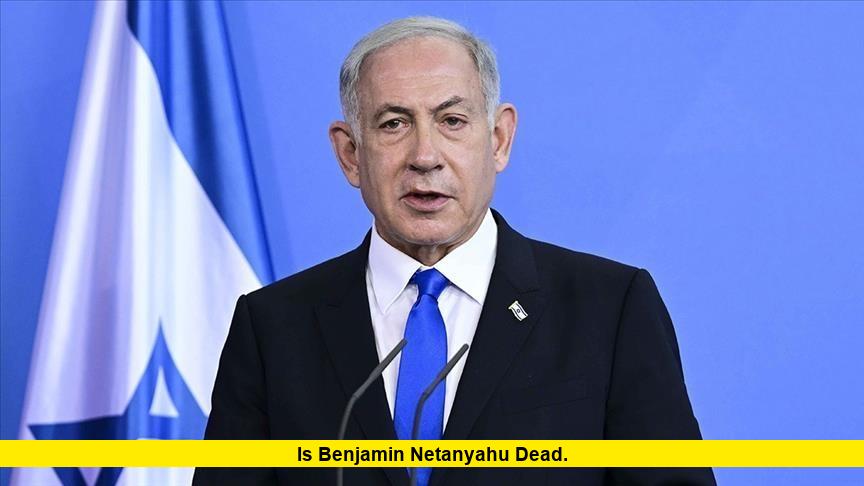
Millions of people grabbed their phones this past week and typed the same four words into Google: is Benjamin Netanyahu dead. The question exploded across every major platform simultaneously — TikTok, X, Facebook, Instagram — generating millions of impressions within hours and sparking debates in comment sections from Miami to Minnesota. So what actually happened? Here is the full story, the specific claims, and where things stand right now.
The short answer is no. Netanyahu is alive, has appeared publicly multiple times, and held a nationally broadcast press conference just days ago. But the way this rumor was born, mutated, and spread tells a much bigger story about how misinformation moves in wartime — and why so many people believed it.
Stay with this story — it gets more layered the deeper you go, and new developments are still coming in.
What Started the Conversation
On February 28, 2026, the United States and Israel launched coordinated military strikes against Iran. The operation targeted nuclear infrastructure, military command structures, and senior leadership. Iranian Supreme Leader Ali Khamenei was killed in the attack. President Donald Trump announced it on social media. The geopolitical shockwave was immediate.
Iran responded with massive retaliatory missile barrages aimed at Israeli cities. In the hours that followed, Netanyahu went quiet. No video. No statement. No public appearance. That brief, security-driven silence — completely normal during an acute military crisis — was all the rumor machine needed to go to work.
1. What People First Noticed
Users on X and Telegram flagged the gap almost immediately. Netanyahu had not posted a video in nearly three days. His last public images were four days old. In the middle of a live war, that absence felt unusual to people watching closely.
Iranian state-linked media moved fast to fill that vacuum. Without any actual evidence, they published reports suggesting Netanyahu had been “severely injured or killed” — pointing to the video silence, reports of tightened security around his Jerusalem residence, and the postponement of a planned diplomatic visit as supposed proof. None of those factors constituted evidence. But online, context rarely matters as much as timing.
2. The Specific Claims That Went Viral
The rumors mutated quickly and grew more dramatic with each reshare. The main claims that circulated widely included:
- Iran had bombed Netanyahu’s personal home and killed his brother, Iddo Netanyahu
- National Security Minister Itamar Ben-Gvir had been wounded in the same strike
- A Facebook page titled “R.I.P. Benjamin Netanyahu” attracted close to one million likes before being flagged as a hoax
- A TikTok video claimed Iranian missiles had ended the prime minister’s life and racked up millions of views
- A Facebook video claimed to show “grief inside Israeli underground bunkers” following Netanyahu’s death
- One post insisted Al Jazeera had briefly reported his death before deleting the story — a claim that was never substantiated
Every single one of those claims was false. Netanyahu’s office publicly dismissed the Iranian assertions as deliberate misinformation. Israeli residents near his Jerusalem office reported no signs of any missile impact in the area after Iran claimed to have struck it. Iddo Netanyahu was not killed. Ben-Gvir posted a video on his own TikTok account stating clearly he was alive and unharmed.
3. What Social Media Users Were Saying
The comment sections became a case study in how fast misinformation travels when it carries emotional weight. Users who believed the story were sharing it out of genuine shock. Those who had already debunked it were exhausted from repeating themselves.
Several verified accounts tried to push back with documented evidence of Netanyahu’s ongoing activity — his security meetings, his site visits, his live interview on Fox News on the evening of March 2 — but the corrections never moved as fast as the original claims.
Others noted the suspicious pattern. Every time a major development hit in the Israel-Iran conflict, a Netanyahu death rumor followed within hours. This was not the first time. During earlier stages of the fighting, Iranian military spokesmen had already claimed Netanyahu’s fate was “unclear” after a supposed strike that his office called fabricated.
4. What Netanyahu Actually Did During the Rumor Period
This is where the timeline becomes important. While millions of people online debated whether he was alive, Netanyahu’s documented public activity told a completely different story.
On March 1, he held a security meeting at military headquarters in Tel Aviv with the Defense Minister, the IDF Chief of Staff, and the Director of the Mossad. Official images from the meeting were released publicly.
On March 2, he visited Beit Shemesh in person — a city where a missile strike had killed nine civilians — and met with grieving families and first responders on-site. That same evening, he appeared live in a broadcast interview, stating the war with Iran would not become an “endless war.”
On March 5, his office documented a phone call with French President Emmanuel Macron. On March 6, he visited an impact site in Beersheba. On March 7, a formal statement was published by the Prime Minister’s Office.
He was not hiding. He was running a war.
5. The Press Conference That Ended the Debate — And Then Sparked a New One
On March 12, Netanyahu held his first full press conference since the conflict began thirteen days earlier. It was broadcast live across multiple major platforms and watched globally.
He said Israeli strikes had killed top Iranian nuclear scientists. He declared that Iran had suffered historic damage to its military and nuclear capabilities. He warned Hezbollah that Lebanon’s government needed to disarm them or Israel would do it. He said Israel was “crushing the terror regime in Iran” and described a country that was now “stronger than ever — at least a regional power.” He referenced near-daily calls with President Trump and outlined a vision for what comes next in the region.
That should have ended it.
Instead, a new conspiracy immediately took its place. Social media users began claiming that Netanyahu appeared to have six fingers in a still image from the press conference video, suggesting the footage was AI-generated and the man on screen was not really him. The claim spread just as fast as the original death rumor. Analysis of the full video footage, frame by frame, showed that the apparent extra digit was a shadow created by a crease in his palm during a hand gesture — visible in one frame and absent in every frame surrounding it.
Why Reality TV Stars and World Leaders Face the Same Hoax Playbook
Netanyahu’s situation follows an almost identical pattern to celebrity death hoaxes that have targeted actors, musicians, and politicians for years. The formula is always the same: a moment of reduced visibility, a dramatic real-world event providing cover, an anonymous social media post making the claim, and an algorithm that rewards engagement over accuracy.
The difference with wartime hoaxes is that the stakes are higher, the emotional charge is stronger, and adversarial actors — in this case, Iranian state-affiliated media — have direct strategic incentives to push the narrative. Chaos, uncertainty, and public doubt about enemy leadership are powerful psychological weapons, and they cost nothing to deploy.
Death hoaxes about Vladimir Putin followed the exact same arc during the Russia-Ukraine conflict. This is a documented playbook, not a spontaneous internet phenomenon.
What Happens Next
As of March 14, 2026, Benjamin Netanyahu is Israel’s sitting Prime Minister and shows no signs of stepping back. The Israel-Iran conflict continues to escalate. Hezbollah is engaging on Israel’s northern border. Iran has launched drone and missile attacks on Gulf countries, forcing oil terminals to halt operations. Parliamentary elections in Israel are still scheduled for November, and the latest polling suggests Netanyahu may be losing political ground despite the military campaign.
The rumor that began as an Iranian media talking point burned through global social media in under 72 hours, generated millions of interactions, and still has not fully died — even after a live press conference. That, more than anything, is the real story here.
The question is benjamin netanyahu dead has been answered. The harder question — about who benefits when that kind of misinformation spreads and why platforms keep amplifying it — still does not have a satisfying answer.
If this story has you thinking about how fast misinformation can travel during a wartime crisis, drop your take in the comments below — and keep coming back as this conflict continues to develop in real time.