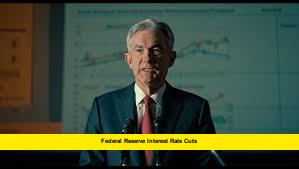
The Federal Reserve has delivered its third straight quarter-point rate cut, lowering its benchmark rate to a target range of 3.50% to 3.75% and signaling a cautious but important shift toward easier monetary policy as 2025 comes to a close. This latest move marks the lowest level for the federal funds rate since the Fed’s aggressive inflation-fighting campaign began in 2022, and it reflects growing concern over a cooling labor market and stubborn inflation that remains near 3%. For households, businesses, and markets, the decision raises a critical question: how far and how fast will federal reserve interest rate cuts continue in 2026 as policymakers weigh growth risks against price stability.
Fed delivers third consecutive rate cut
At its December 2025 meeting, the Federal Open Market Committee approved a 25-basis-point reduction in the federal funds rate, bringing the target band down to 3.50%–3.75%. This follows similar quarter-point cuts in September and October, confirming that the central bank has moved decisively into an easing cycle after more than a year of restrictive policy.
The decision was not unanimous. Three committee members dissented, an unusually high level of disagreement that highlights deep divisions over how much stimulus the economy truly needs. The Fed’s statement described the cut as part of a data-dependent approach, emphasizing that future moves will hinge on the “timing and extent” of changes in the economic outlook rather than any pre-set path.
Why the Fed is cutting now
Several forces pushed the Fed toward another cut before year-end. Growth has slowed, hiring has cooled from its earlier pace, and consumer confidence has weakened under the weight of high borrowing costs and lingering price pressures. Even though the economy has avoided an outright recession, the mix of softer demand and elevated rates has raised the risk of a sharper downturn in 2026 if policy remains too tight.
At the same time, inflation has come down significantly from its peak, giving the Fed more room to reduce rates without immediately reigniting a price surge. Policymakers are trying to steer a narrow course: easing enough to support growth and employment, but not so much that inflation drifts away from their 2% target again.
Inflation stuck around 3%
September 2025 data show the annual inflation rate at about 3%, up slightly from 2.9% in August and still above the Fed’s long-run goal. The underlying consumer price index climbed as gasoline, housing, clothing, and airfare all registered increases, with fuel costs jumping more than 4% in a single month.
This pattern suggests that while the worst of the inflation spike is over, price pressures have become “sticky” at a level higher than the central bank would like. Economists note that tariff policies and elevated input costs continue to filter through to consumers, complicating the Fed’s effort to declare victory on inflation even as it cuts rates.
How divided is the Fed?
The December meeting showcased how sharply opinions differ inside the Fed about the right pace of easing. Some officials pushed for a more aggressive cutting path, pointing to signs of a cooling labor market and the risk that high rates could unnecessarily weaken growth. Others urged caution, arguing that with inflation still above target and tariff-driven pressures in play, too much stimulus could force the Fed back into tightening mode later.
The statement’s language around “timing and extent” of future rate changes was notably more hawkish than markets had anticipated. That choice of words signals that while the Fed is willing to keep easing, it does not see a rapid series of cuts as guaranteed—especially if inflation refuses to move closer to 2%.
Where rates stand after the December move
With the December cut in place, the federal funds rate now sits in a range of 3.50%–3.75%, the lowest level since the early phase of the tightening cycle ended. Earlier in October, the benchmark rate had been reduced to 3.75%–4.00%, following a move from higher levels as the Fed began to unwind its restrictive stance.
This rapid shift over three consecutive meetings underscores how quickly policymakers have pivoted from “higher for longer” to a more balanced approach as incoming data pointed to slower growth and persistent—but moderating—inflation. Even so, the central bank continues to describe policy as near the upper end of a “neutral” range, suggesting it still sees rates as somewhat restrictive rather than outright stimulative.
Table: Current snapshot of key economic indicators
How markets reacted to the December cut
Financial markets welcomed the December decision, treating it as confirmation that the Fed is committed to easing conditions while still guarding against a renewed inflation surge. Major stock indexes climbed after the announcement, and government bond yields moved lower as traders priced in a higher probability of additional cuts in 2026.
However, the rally was tempered by the hawkish tone of the Fed’s message. By stressing that future cuts are not guaranteed, policymakers reminded investors that they are willing to pause if inflation refuses to cooperate or if growth surprises to the upside. That tension between market expectations and Fed caution will remain a key driver of volatility in the months ahead.
What this means for mortgages and housing
For homeowners and buyers, the shift lower in the federal funds rate is a welcome sign, but it does not translate into instant, dramatic mortgage relief. Thirty-year fixed mortgage rates tend to follow longer-term Treasury yields rather than the overnight rate directly, yet the decline in yields after recent Fed actions has already started to ease some pressure on borrowing costs.
Buyers may see slightly more affordable monthly payments over time if bond yields stay lower and lenders adjust pricing to reflect a less restrictive Fed. Still, housing affordability remains constrained by years of rapid price appreciation and elevated insurance, tax, and maintenance costs, which rate cuts alone cannot fully offset.
Impact on credit cards, auto loans, and personal borrowing
Short-term consumer credit products react more directly to Fed moves. Credit card APRs and many variable-rate personal loans are linked to benchmarks that closely track the federal funds rate. As banks reprice these products, consumers should gradually see slightly lower interest charges, particularly if the easing cycle extends into 2026.
Auto loan rates also respond to shifts in funding costs, and competition among lenders could lead to better financing terms for borrowers in the months ahead. That said, high vehicle prices and tighter underwriting standards may limit how much relief households actually feel, especially for those with weaker credit profiles.
How savers will feel the change
While borrowers stand to benefit from lower rates, savers face the opposite reality. Yields on online savings accounts, money market funds, and certificates of deposit tend to move in the same direction as the Fed’s benchmark. After a period of unusually attractive savings returns, deposit rates are likely to drift downward as banks adjust to cheaper funding conditions.
For retirees and others who depend on interest income, this environment may encourage a renewed search for yield in bonds, dividend-paying stocks, or other income-focused investments. That shift brings its own risks, making diversification and risk management increasingly important as the rate environment changes.
What this means for businesses and hiring
Businesses that rely on bank loans and credit markets can benefit from lower borrowing costs, particularly in interest-sensitive sectors such as real estate, manufacturing, and capital-intensive services. Cheaper credit can free up cash for investment in equipment, technology, and hiring, helping cushion the slowdown in demand.
However, many companies are still navigating higher input costs and uncertain consumer demand, which can make them cautious about expanding aggressively. Some firms may use the lower-rate window primarily to refinance existing debt or strengthen balance sheets rather than to launch major new projects, especially while inflation remains above 2% and policy signals stay mixed.
Looking ahead: what 2026 could bring
Forward-looking analysis from major research shops suggests that the Fed could deliver additional cuts in 2026 if the economy continues to cool and inflation trends gradually lower. Some forecasts envision two quarter-point reductions by mid-2026, which would take the policy rate toward a range of about 3%–3.25%.
Still, those projections are conditional on a delicate balance: moderate growth, further easing in inflation, and no major shocks from energy prices, tariffs, or global financial stress. Any surprise resurgence in inflation or sudden rebound in growth could prompt the Fed to slow or halt cuts, while a sharper-than-expected downturn might push it to ease more aggressively.
How households can navigate this rate environment
For U.S. households, the current phase of policy is a time to reassess budgets, debt, and savings strategies. Homeowners and prospective buyers might want to monitor mortgage offers closely and consider whether refinancing or locking in a rate makes sense as yields adjust. Those carrying high-interest credit card balances could benefit from consolidating debt or negotiating lower rates as lenders recalibrate pricing.
Savers, meanwhile, may look at laddered CDs, short-term Treasuries, or diversified bond funds to preserve some yield while preparing for the possibility of further declines in deposit rates. Across the board, staying informed about inflation trends, labor market data, and Fed communication will be key to making sound financial choices in an evolving environment.
Share how these rate cuts are affecting your own budget, borrowing, or savings decisions in the comments, and keep checking back for fresh analysis as the Fed’s next moves come into focus.