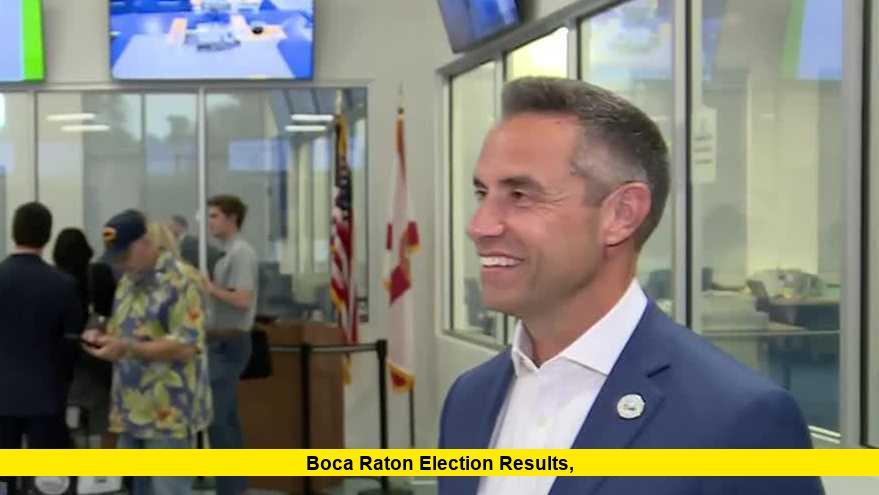
The Boca Raton election results of March 2026 have officially closed one of the most suspenseful chapters in the city’s political history. After a tense multi-day recount process that gripped South Florida, Andy Thomson has been declared the new mayor of Boca Raton — defeating political newcomer Mike Liebelson by just five votes. Alongside that razor-thin mayoral outcome, voters overwhelmingly rejected two major downtown redevelopment proposals, signaling a decisive shift in how residents want their city governed.
This election is trending across Florida and nationally because of what it represents: a community that turned out in record numbers, forced a recount, and delivered a clear verdict against overdevelopment — all in a race that came down to fewer votes than most people have contacts in their phone.
This story is still developing — keep following for updates as Boca Raton’s new mayor prepares to take office and the city charts its next chapter.
Background: Why Boca Raton Was Already Watching Closely
Boca Raton, one of Palm Beach County’s most affluent and fastest-growing cities, had been building toward this election for months. Outgoing Mayor Scott Singer, who was term-limited and chose to run for Congress, left behind a City Hall at the center of enormous controversy. Two major development proposals — collectively known as the One Boca plan — had divided the community sharply.
The proposals called for a public-private redevelopment of the city-owned government campus, including a new city hall, hotel, shops, restaurants, and office space. A companion measure sought a 99-year lease of 7.8 acres of public land near the Brightline Station to a private developer for a mixed-use project.
Critics argued the long-term leases amounted to a giveaway of public land, would worsen traffic, reduce green space, and benefit developers far more than residents. Supporters said the projects would modernize downtown Boca Raton, generate revenue, and create a more walkable urban environment. That debate became the defining issue of the entire election cycle.
What Triggered the Current Discussion
When polls closed on March 10, the mayoral race was too close to call. Thomson — a sitting City Council member, Democratic lawyer, electrical engineer, and adjunct professor at Florida Atlantic University — led Liebelson by just six votes out of nearly 19,000 cast. With a margin of 0.03 percentage points, Florida law automatically triggered a machine recount.
The machine recount, conducted Friday morning at the Palm Beach County Supervisor of Elections office in West Palm Beach, narrowed the gap even further — leaving Thomson ahead by only one single vote. That result triggered a mandatory manual recount, during which election officials carefully reviewed overvotes and undervotes: ballots on which voters either made too many selections or left the mayor’s race blank entirely.
After hours of hand review under the supervision of the Palm Beach County Canvassing Board — with both candidates, their campaign teams, and members of the public watching from a designated viewing area — Thomson’s lead grew to five votes. The final certified totals: Thomson, 7,572 votes; Liebelson, 7,567 votes. Palm Beach County Supervisor of Elections Wendy Sartory Link formally declared Thomson the winner Friday afternoon.
Public Reaction
The response across Boca Raton and the wider Florida political landscape was immediate and intense. Thomson’s win drew national attention from the Democratic National Committee, with party leaders calling it a historic breakthrough — noting it marks the first time in more than 30 years that a Democrat-aligned candidate has won the Boca Raton mayor’s seat.
On the ground, supporters of the Save Boca movement — a grassroots group that had organized heavily against the development proposals — celebrated what they viewed as a complete sweep. All three of their endorsed city council candidates won their races decisively, giving the group a working majority on the Boca Raton City Council. Newly elected council member Michelle Grau, one of those Save Boca candidates, put it plainly: “The residents have won. We’ve got to build back trust in our city.”
Liebelson supporters, meanwhile, expressed frustration. Before the recount concluded, Liebelson sent a formal letter to the Supervisor of Elections raising objections to a batch of mail-in ballots added to the count after Election Day. He questioned the distribution of votes within those ballots. The Supervisor of Elections responded that the late additions were a standard part of the process, reflecting ballots collected from drop-off sites and post offices.
What the Candidates Have Said
Thomson struck a unifying tone after being declared the winner. He said his top priority as mayor would be bringing the Boca Raton community together, acknowledging that the close race reflected real divisions within the city.
During the campaign, Thomson repeatedly emphasized his commitment to tax restraint, opposition to handing public land over to private developers, responsible growth, and better traffic management. He ran on those issues with precision, and his message clearly resonated with a majority — even if just barely.
Liebelson, for his part, had campaigned as an outsider ready to shake up City Hall. He called for lower taxes, reduced government spending, and a departure from what he characterized as developer-friendly governance. After the recount concluded, he did not immediately announce a formal legal challenge, but left the door open, saying he had not yet decided his next steps.
Why This Topic Matters
The Boca Raton election results carry weight far beyond the city limits. Florida has been a battleground for local development fights for years, and this outcome sends a powerful signal: even in a wealthy, historically conservative South Florida city, voters are willing to push back hard against projects they view as prioritizing developers over residents.
The landslide rejection of both redevelopment referendums — 74% against the One Boca campus plan, 73% against the Brightline-area lease — was not a close call. It was a mandate. Voters also rejected a bond measure to fund a new police station, 55% to 45%, partly because opponents tied it to the broader development controversy.
Nationally, the Democratic Party’s ability to flip a mayoral seat in Boca Raton adds another data point to ongoing debates about voter sentiment in the Trump era, with party officials citing local affordability concerns and dissatisfaction with state-level Republican leadership as key factors.
What Comes Next
The new mayor and council take office on March 31, 2026. From day one, the incoming leadership faces real governing challenges. The city still needs a plan for its aging government campus — the proposal voters rejected leaves that question unanswered. The police station funding issue remains unresolved. And the broader question of how Boca Raton manages growth, traffic, and public land will not disappear simply because two referendums failed.
Whether Liebelson formally challenges the results legally is still unknown and could add further delay to the certification process. The Palm Beach County Supervisor of Elections must still issue final certification before Thomson’s win is fully official.
What is already certain is that Boca Raton’s political landscape has fundamentally shifted. A new majority controls the council, a new mayor with a unifying mandate is preparing to lead, and the community has spoken loudly about what kind of city it wants to be.
What do you think — did Boca Raton voters get it right? Drop your thoughts in the comments below and stay tuned as the city’s new leadership takes the reins on March 31.