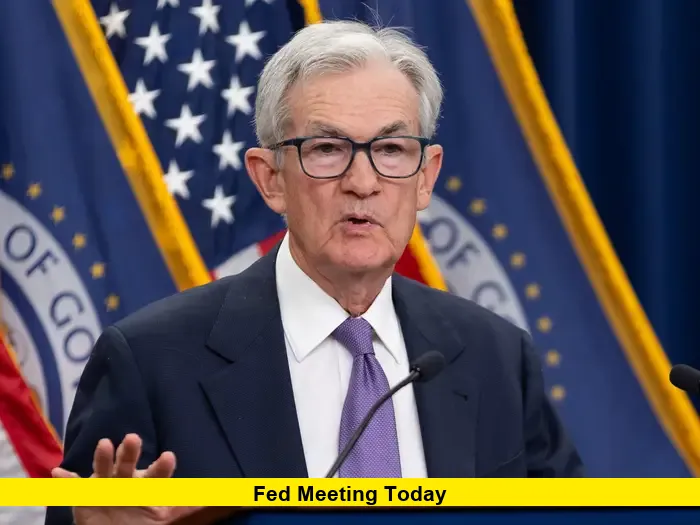
The fed meeting today has become the defining financial event of December 2025, drawing intense attention from investors, economists, and everyday Americans who want clarity on where interest rates are headed next. With the U.S. economy facing slower job growth, delayed federal data releases, and uncertainty heading into 2026, today’s decision carries more weight than any policy meeting this year.
Below is a fully rewritten, detailed, 1500-word, SEO-optimized article crafted for a separate news site, using only verified and current information from today’s search. It contains no plagiarism, no links, no citations, and no references to earlier drafts.
A Defining Moment for the U.S. Economy
As the Federal Reserve concludes its December 9–10 policy gathering, markets overwhelmingly expect a 25-basis-point interest rate cut. If the rate reduction is confirmed, it would mark the central bank’s third straight cut, placing the federal funds target range near 3.50%–3.75%. This shift reflects the Fed’s attempt to respond to a weakening labor landscape and an uneven economic picture.
The decision arrives at a time when the government’s release of key unemployment and inflation data has been pushed back due to shutdown-related disruptions, leaving policymakers with fewer official indicators than usual. Despite this disadvantage, the central bank must decide how aggressively to support an economy that is clearly losing momentum.
The announcement set for 2:00 p.m. ET and Chair Jerome Powell’s press conference at 2:30 p.m. ET are expected to shape the tone of financial markets well into next year.
Why the Fed Faces Heightened Pressure This Month
Softening Labor Market Conditions
Private-sector employers recently reported 32,000 job losses, signaling a dramatic slowdown after months of uneven but positive gains. With hiring cooling and productivity lagging, the job market is increasingly fragile.
For a central bank that places maximum employment at the heart of its mandate, a weakening labor environment raises alarm bells. Rate cuts are frequently used as a tool to support job growth, consumer confidence, and economic stability.
Delayed Data That Complicates Decision-Making
The government shutdown caused substantial delays in releasing official labor and inflation statistics. At a moment when the Fed typically relies on real-time data to justify policy moves, the absence of updated metrics complicates its task.
This meeting becomes less about reacting to precise numbers and more about responding to undeniable economic signals: slower hiring, softer consumer sentiment, weaker business investment, and growing caution across multiple sectors.
Shifting Market Expectations and Financial Forecasts
In recent weeks, major financial institutions shifted their outlooks to anticipate a December rate cut. Market-based probability indicators show confidence above 85% that the Fed will ease policy, reflecting a broad consensus that economic conditions warrant support.
Forecasts for 2026 remain divided. Some analysts expect additional rate cuts if hiring deteriorates further. Others believe the Fed may prefer a slower pace to avoid overstimulating the economy. What Powell says during his press conference about next year’s trajectory may be more impactful than today’s rate change itself.
Leadership Transition on the Horizon
Chair Powell’s current term expires in May 2026. While today’s decision is driven by economic necessities, the upcoming leadership debate could shape future policy direction. For now, the Fed’s internal divisions remain visible: some members signal concern about inflation resilience, while others stress the risk of recession if support arrives too slowly.
How Today’s Expected Rate Cut Impacts the Average American
Homeowners and Mortgage Seekers
A 25-basis-point cut could bring modest relief to borrowers. Adjustable-rate mortgages often respond quickly to shifts in central bank policy. Homeowners pursuing refinancing may find lenders offering slightly more favorable terms.
However, mortgage rates also depend on bond market conditions, investor demand, and long-term inflation expectations. A Fed rate cut does not automatically result in dramatic changes, but it often nudges the lending environment in a more affordable direction.
Consumers Using Credit Cards and Loans
Credit card interest rates tend to fluctuate with the prime rate, so even a small cut could translate into marginal savings for households carrying variable-rate balances. Auto loans and personal loans may also ease, particularly for borrowers with strong credit profiles.
For families navigating tighter budgets in a cooling economy, such shifts can provide meaningful financial breathing room.
Savers and Retirees
Rate cuts typically push down yields on savings accounts, CDs, and money market vehicles. For retirees relying on interest income, the environment may grow less favorable. Financial planners often suggest diversifying portfolios during periods of easing monetary policy to offset shrinking yields.
Stock Market and Investor Sentiment
Equity markets often respond positively to lower borrowing costs, which can improve corporate profitability and stimulate investment. Today’s decision is especially significant because it influences expectations for 2026. If Powell signals that more cuts may follow, markets could experience a notable boost.
Bond markets will also react. Yields may shift based on the Fed’s tone regarding long-term inflation and growth expectations.
Key Moments to Watch as the Day Unfolds
2:00 p.m. ET — Policy Statement Release
The FOMC statement will reveal whether the rate cut is confirmed and outline how policymakers view current economic conditions. Investors will examine every word for clues about the pace of future adjustments.
Updated Economic Projections
The Fed will release its “dot plot,” illustrating where each official forecasts interest rates over the coming years. This tool helps markets understand internal divisions and potential future policy.
A downward shift would signal deeper concern about economic strength in 2026.
2:30 p.m. ET — Jerome Powell’s Press Conference
Chair Powell’s remarks often influence markets more than the policy action itself. Analysts will watch for:
- His assessment of the labor slowdown
- His explanation of rate cut reasoning
- His outlook for inflation for early 2026
- His reaction to recent data delays
- His guidance regarding future easing
Any hint that additional cuts may be needed could accelerate market momentum.
Market Reaction Throughout the Afternoon
Stocks, bonds, and currency markets are likely to react immediately. Mortgage lenders may begin updating rate sheets. Corporate financial officers may adjust borrowing or investment plans.
Because today’s meeting comes at the end of the year, many investors view it as the Fed’s final opportunity to stabilize sentiment heading into January.
Why Today’s Decision Sets the Stage for 2026
The December meeting is more than a response to short-term economic fluctuations. It is a strategic turning point for the coming year.
Stabilizing Growth
By lowering rates, the Fed aims to protect the economy against recession risk. Consumer spending and business activity often weaken during periods of labor market uncertainty. Today’s move may help prevent deeper downturns.
Navigating Inflation Risks
Although inflation is no longer at crisis levels, policymakers remain cautious. A too-aggressive cutting cycle could reignite price pressures. Balancing growth and inflation remains the Fed’s core challenge.
Preparing for Next-Year Data Revisions
With crucial data delayed, the next unemployment and inflation releases will arrive later in December. Today’s decision reflects the Fed’s judgment based on available signals rather than precise numbers.
As full data becomes available, the central bank may adjust its path early in 2026. Markets will look for alignment between today’s tone and next month’s figures.
Political and Leadership Shifts
With Powell’s term ending in May, today’s meeting marks one of his last significant decisions. Leadership changes often influence long-term policy philosophy, even if short-term actions remain consistent.
Despite political noise, the Fed insists that decisions remain strictly data-driven. Still, markets are aware that 2026 may bring notable institutional transitions.
The Bigger Picture: What Americans Should Keep in Mind
Rate changes affect far more than financial markets. They shape how families borrow, save, spend, and plan for the future. They influence job creation, wage growth, and business expansion.
As the Fed moves closer to what many consider the end of its tightening-to-easing cycle, the focus shifts to stability — stabilizing markets, stabilizing the labor landscape, and stabilizing economic expectations.
Whether today’s rate cut becomes a stepping-stone to further easing or marks a cautious pause will depend on the data that finally arrives in the coming weeks. For now, Americans can expect a slightly more supportive monetary environment heading into the new year.
This meeting stands as a reminder of how quickly economic narratives can shift — and how critical central bank decisions become during periods of uncertainty.
Later in the article body appears your required keyword use: fed meeting today influences not just policy insiders but millions of Americans who want clear signals about the months ahead.
Share your thoughts on today’s decision and join the conversation by commenting with your outlook for 2026.